Potstickers!
Fun! Fun! Fun! I made potstickers!
It’a been on the list for a while. But I’ve never cooked Chinese, so I just never needed an appetizer to match. This week I decided it was time. I was making Kung Pao Chicken (ok, so maybe that’s not REAL Chinese) and potstickers were in order!
There was a bit of chopping involved.

But that was the hardest part. At least for the filling.

And there was a dough. I was skeptical at first, because all the recipes called simply for flour and water. But it worked!

I rolled out little 4″ discs and plopped on some filling.

And then I made little pleated pouches! So damn cute!

I fried the pouches in peanut oil, then poured in some water and covered them so that they could steam.

And they were delicious! Well worth it. I even made extra ones and froze them for later.

PORK POTSTICKERS RECIPE:
Pork Filling:
1 lb ground pork
1/2 cup napa cabbage, minced
1 stalk green onion, minced
1/2 cup bamboo shoots, minced
1/4 cup ginger root, minced
3 TBSP soy sauce
2 TBSP sesame oil
1 TBSP corn starch
– Throw everything in a bowl and mix well. Cover and store in the fridge.
Dough:
4 cups flour
1 1/2 cup warm water
– Put flour and half of the water in a bowl and stir with a fork. Slowly add in more water, a TBSP at a time. Once it is stiff enough, knead. Keep adding water until it is smooth, but not sticky. You might not use all of the water.
– Cover with a damp towel and let sit for 30 minutes to relax the gluten.
– Cut into chunks and roll into 3-4 inch discs.
– Place roughly 1 TBSP of filling in the center and shape into a pouch.
– Heat oil in a pan over high heat. Place potstickers in pan and fry until the bottoms are nice and browned.
– Shielding your face with the lid, pour in some water (1/2 a cup or so) and cover immediately. Lower heat to medium low and cook for 6 minutes.
– Place potstickers on plate to cool while you mix dipping sauce.
Dipping sauce:
1/2 cup soy sauce
3 TBSP red wine vinegar
1/2 tsp sesame oil
1/2 tsp chili garlic paste
1 tsp minced ginger
1 clove garlic, minced
1/2 tsp sugar
– Mix everything together.
Salted Creme Fraiche Caramels!
Sometimes a project just smacks you on the head.
It’s been a busy two weeks, first a trip to the Cascades (gorgeous!) and then a literal PILE of friends from San Francisco descended on Seattle for a weekend of total gluttony (and all I’m gonna say about that is “Don’t eat a Bacon Cheeseburger at Lunchbox Laboratory before noon. It hurts.”). And the sun. Did I mention the sun? It’s been shining over Seattle for two weeks. There was no way I was spending my days in the kitchen. I was planting a montmorency cherry tree in my front yard. And blueberry and raspberry bushes in the back. And if I can convince John to drive me back to the nursery I suspect we’ll be adding a comice pear tree to the family.
BUT. Back to projects. For some reason caramels just keep popping up. Everywhere. I go out to eat and one gets handed to me with the bill. I go to candy stores and they are there, taunting me. Even Pantea bought me a box as a present before flying away. The weird thing is, for some strange reason, they all tasted like raisins. I can’t explain it, but it was making me think that I left my taste buds in San Francisco. So I decided to make my own. I poked around on the interweb and found a recipe that had the two magic words: salt and creme fraiche. The only changes I made were adding some vanilla and slightly lowering the salt, because I didn’t want that to be ALL one tasted.
First I warmed up some creme fraiche over low heat.

While that was warming I heated up butter, sugar, corn syrup, milk, vanilla bean seeds and salt. This started out easy enough, but it was a tad tricky getting it up to 300 degrees without it burning in spots. There was a lot of stirring involved. I would have taken pictures, but I unfortunately only have 2 hands.
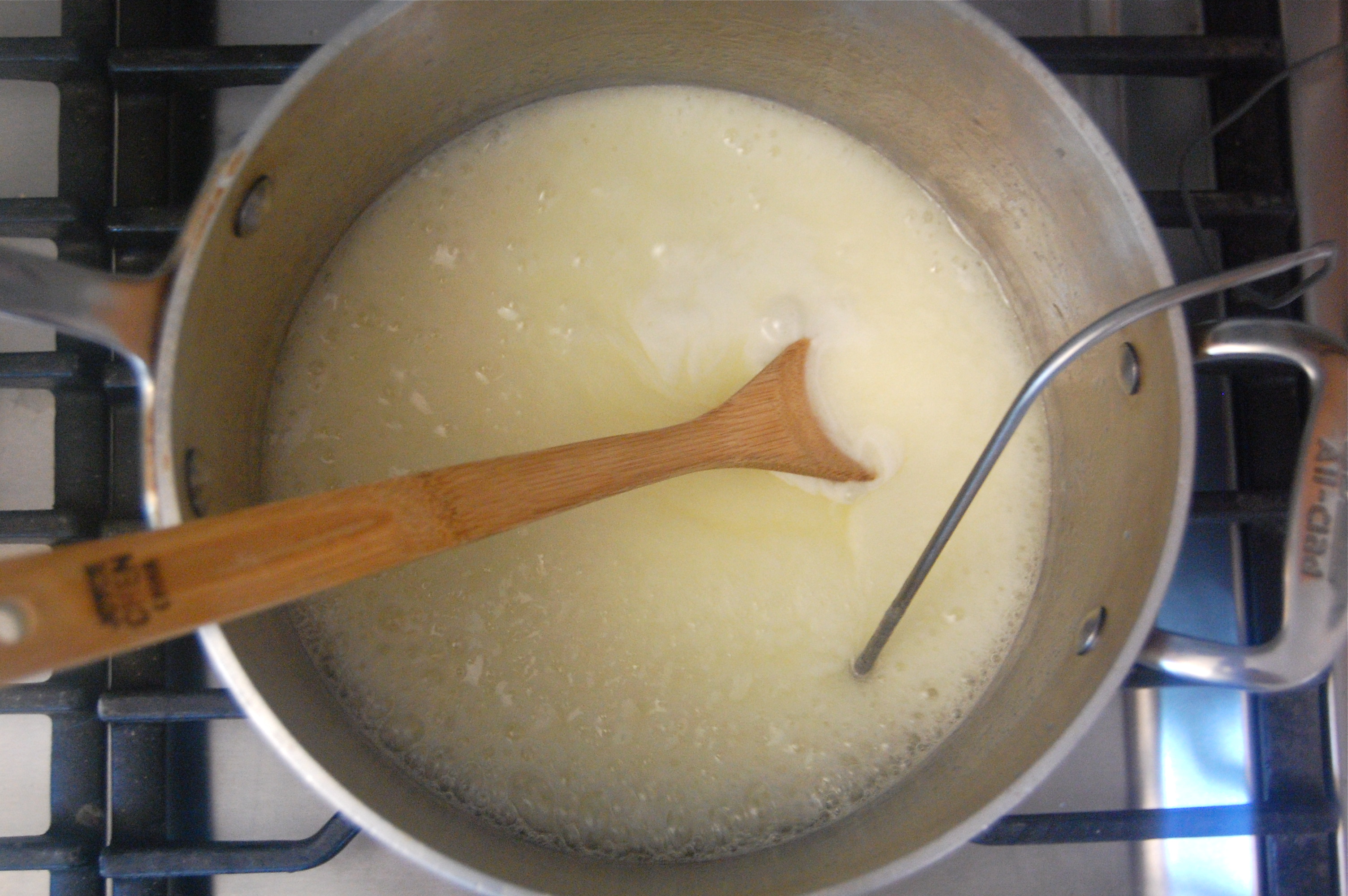
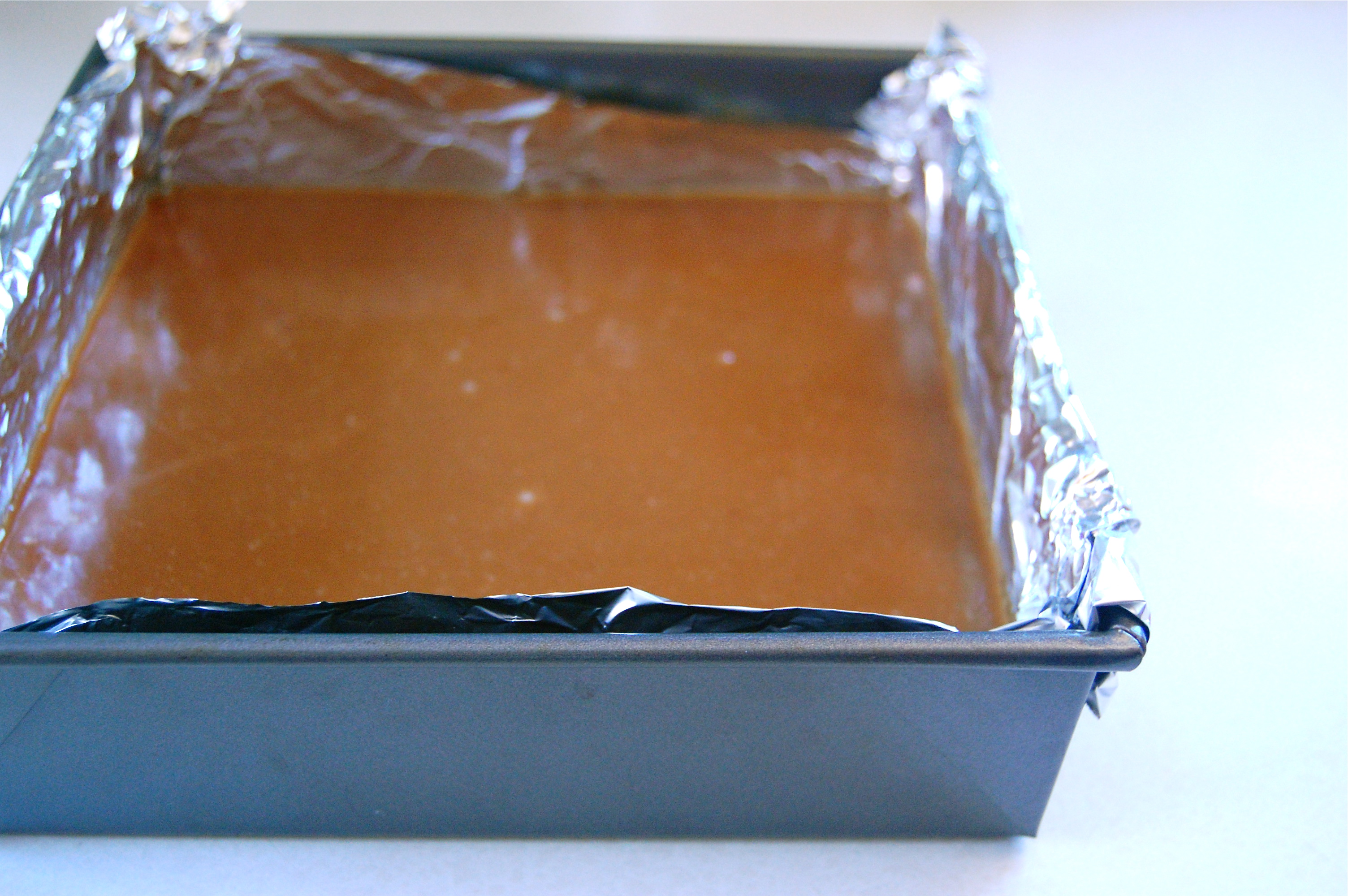
Once it was nice and dark (and 300 degrees) I poured the mixture into a foil lined baking pan. I let it sit overnight to cool.
Then I began the arduous task of slicing it into individual pieces. Can we just take a moment to appreciate that Seattle sunlight?
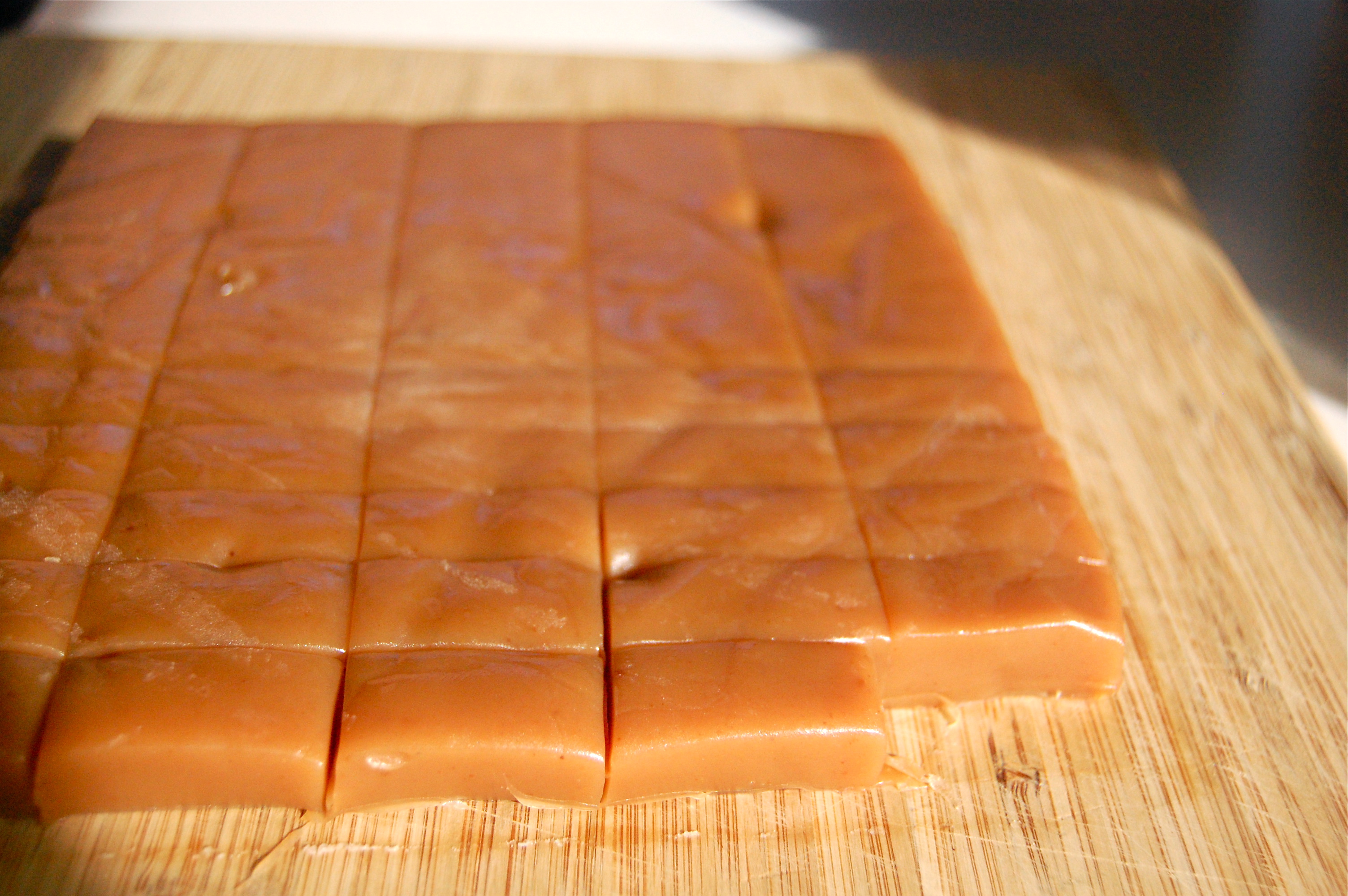
And candy was had by all! Well, by me and John anyways. I think I’ll be mailing some of this off to friends, because there is just no reason two people need this much deliciousness in their home. And btw, I am happy to report that these caramels did not even remotely taste like raisins. I dare say they were perfect.

SALTED CREME FRAICHE CARAMELS RECIPE:
250 grams sugar
250 grams light corn syrup
250 grams whole milk
200 grams unsalted butter
1 TBSP + 2 tsp salt
1/2 vanilla bean seeds
200 grams creme fraiche
– Line an 8″ square cake pan with foil and brush with melted butter.
– Put creme fraiche in small saucepan over low heat. You want it all loose and melty, not boiling.
– Rub vanilla bean seeds into sugar and place all the ingredients (minus creme fraiche) in a medium sauce pan. Heat over high with a thermometer in place, stirring occasionally. Once it starts to take on color, stir constantly, scraping around the sides to prevent scorching.
– When it reaches 300 degrees, very very slowly pour in the creme fraiche. Since it will probably splatter and attack you, I recommend wearing an oven mitt for protection. Because caramel burns, they hurt. And they scar. Stir the crap out of the caramel, getting all the lumps out.
– Once it is perfectly smooth, pour it into the lined cake pan. Let it cool completely, at least a few hours.
– Turn the candy out onto a cutting board and start slicing. It will stick, but you can easily scoop up the pieces with an offset spatula.
– Wrap them in waxed paper and hand them out to all your friends!
Fried! Pig! Skin!
Dear Pork,
You did it again. You made me fall in love with you all over. It started months ago, you see. Living in San Francisco. There was this guy, Ryan Farr his name was. He was making magic with pork skin, and his chicharrones were showing up all over town. I was deeply jealous. I hated him for knowing you in a way that I didn’t. I mean, I grew up in ALABAMA – I should be frying pig skin in my SLEEP! Why wasn’t I grandfathered in on the secret? And rumor had it that this Mr. Farr was taking his technique with him to his grave. So I was on my own to find my way into your heart/skin. All hope was seemingly lost, months of searching were fruitless. But then it happened. I read somewhere that the new Momofuku cookbook was spilling the beans. Step by step directions for perfect chicharrones. I ordered some fatback from my new favorite butcher shop and left the house 5 minutes later to buy a copy. There was no stopping me now.
When my fatty skin came, I was enthralled. You looked so innocent, like a topographical map of a Washington state. I could have stared at you all day, folding you into different shapes.

But we were at the beginning of a long journey together, so I needed to get to work. First I separated your skin from your fat.

I put your skin in a pot of water and boiled you for 1 1/2 hours, long enough to soften up the fat left clinging to you.

The rest of your fat I cubed up and put in another pot, with a bit of water. Because when you have that much fat sitting on your kitchen counter, you might as well render some lard.
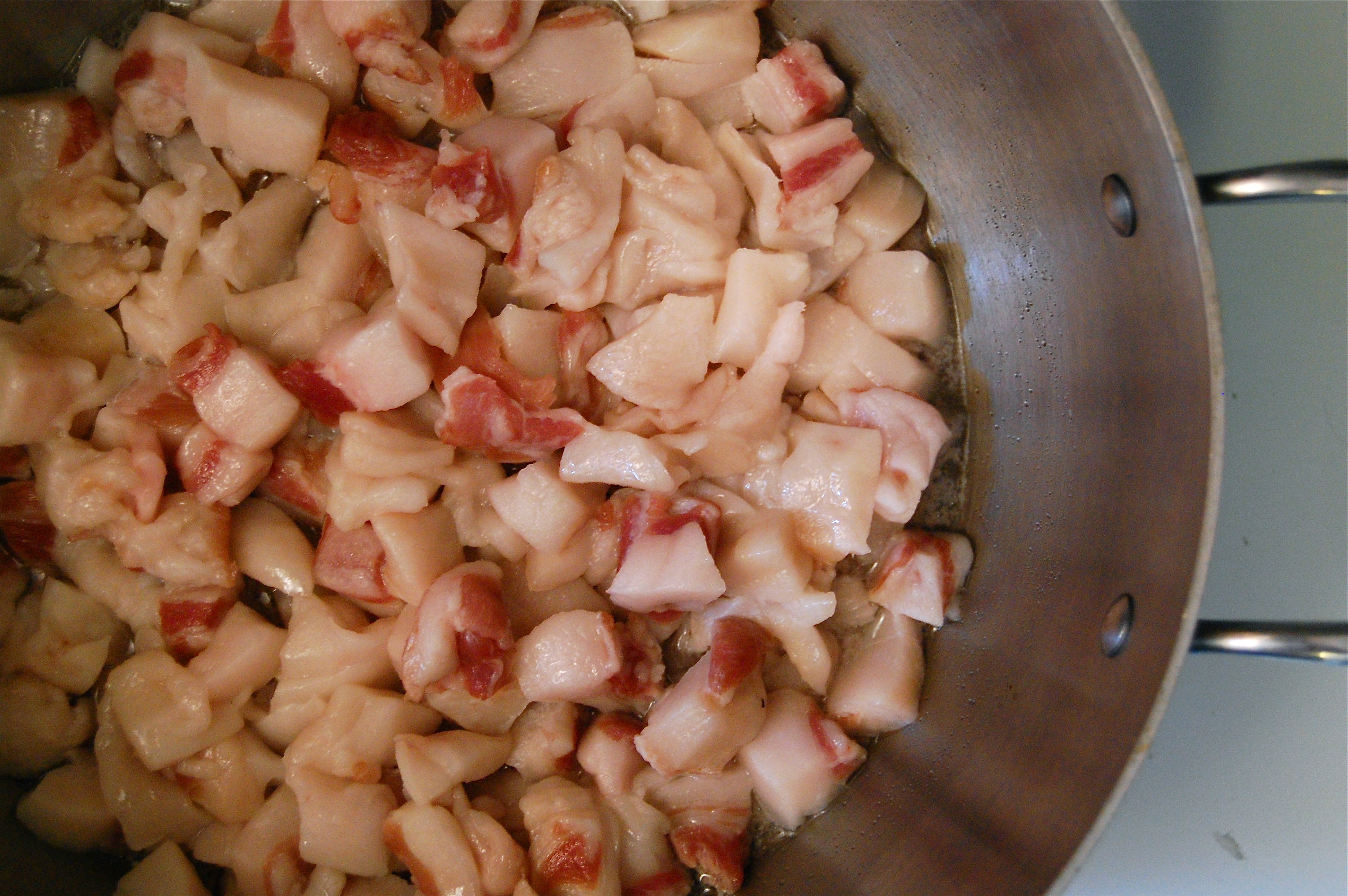
After your skin was done boiling, I stretched you out and placed you in the fridge. There you chilled for another 2 hours. Then I set about the arduous task of scraping off every last bit of fat. The book recommended the side of a spoon, but I had to use a knife. Because this was OUR moment and I wanted you to be perfect. Then I popped you in the dehydrator and let you do your thing overnight.
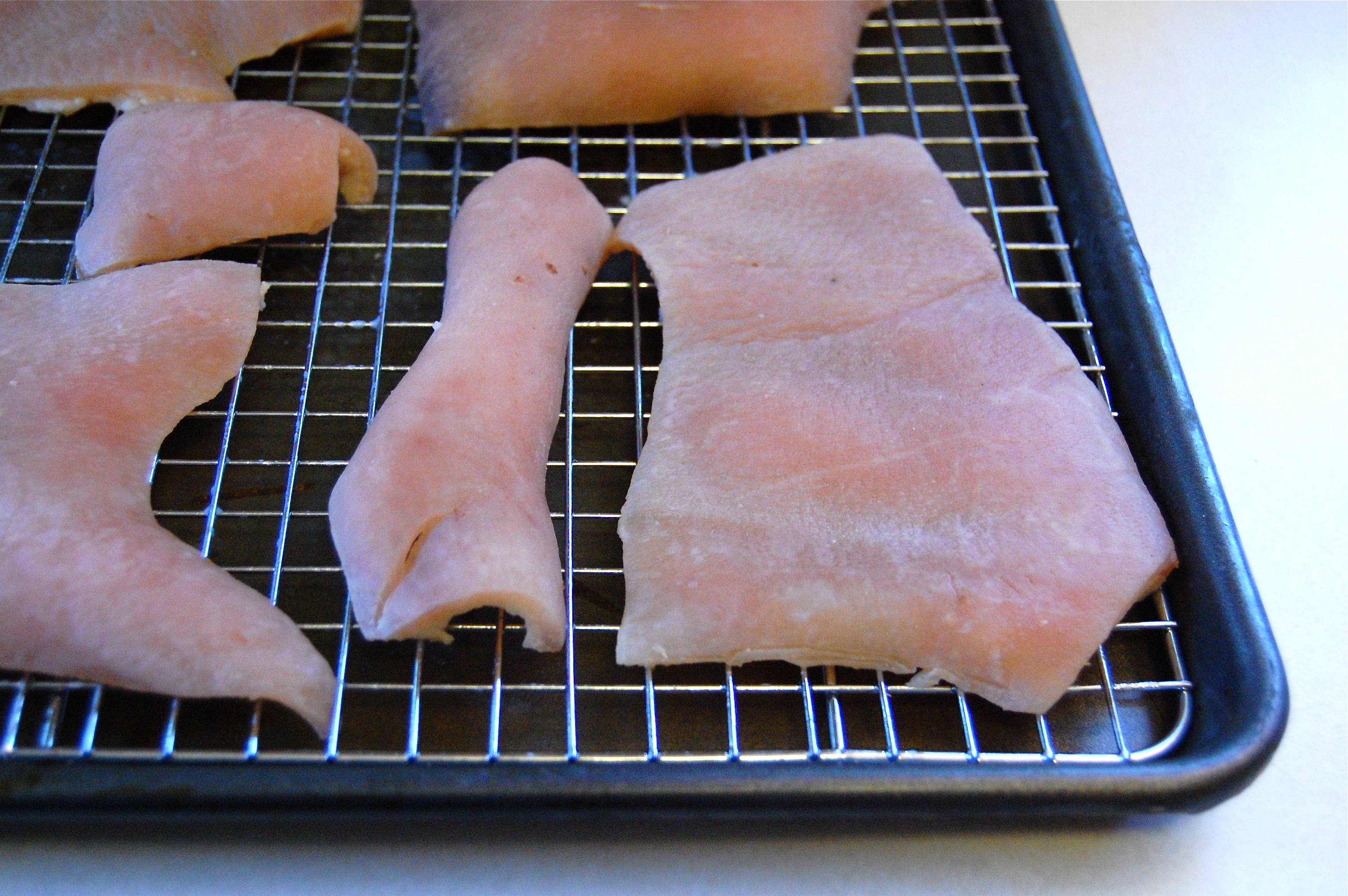
In the meantime, I still had some fat melting away on the stove. It took 8 hours, but eventually you released all your juiciness.

I strained you, smashing to get every last drop of liquid fat.
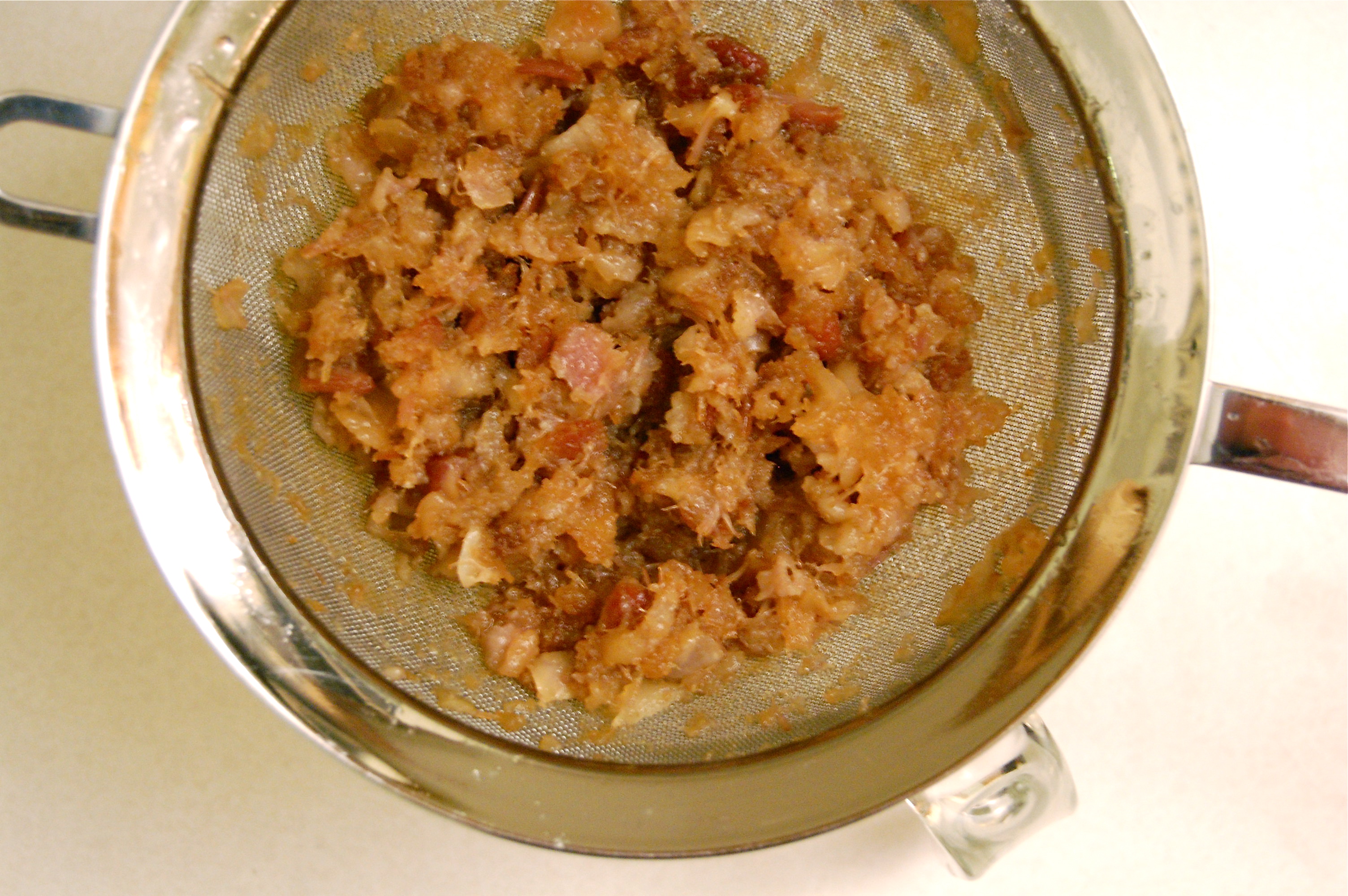
And was very pleased with your color, almost perfectly clear.

When you cooled, you were beautiful. Snowy. Pure.

I slept well, knowing that when I awoke the next morning, you would be ready for me. And you were. 12 hours in the dehydrator had left you thin and leathery. I broke you into tiny pieces.

I heated your lard to 390 degrees and tossed in your skin, one piece at a time.
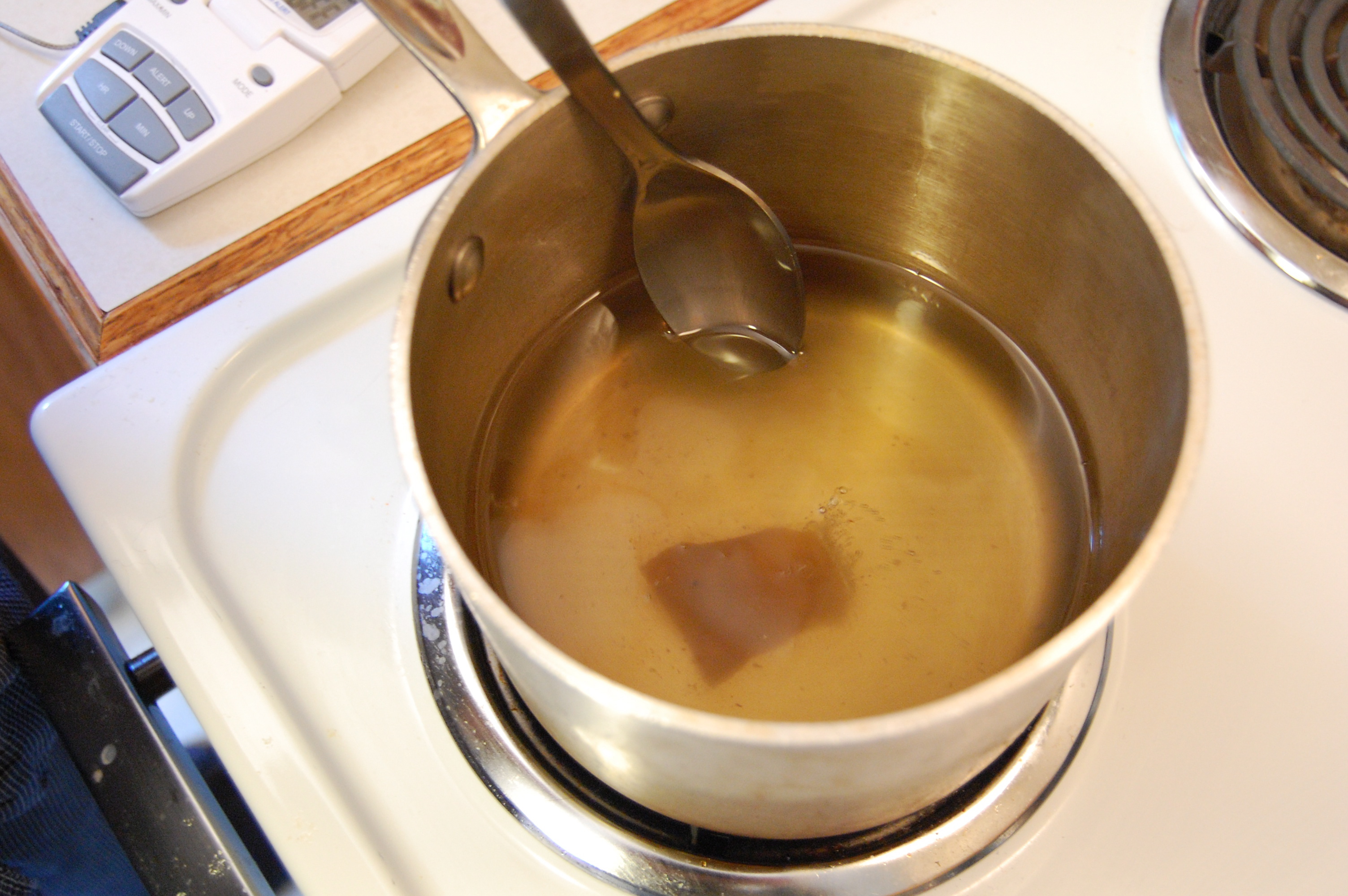
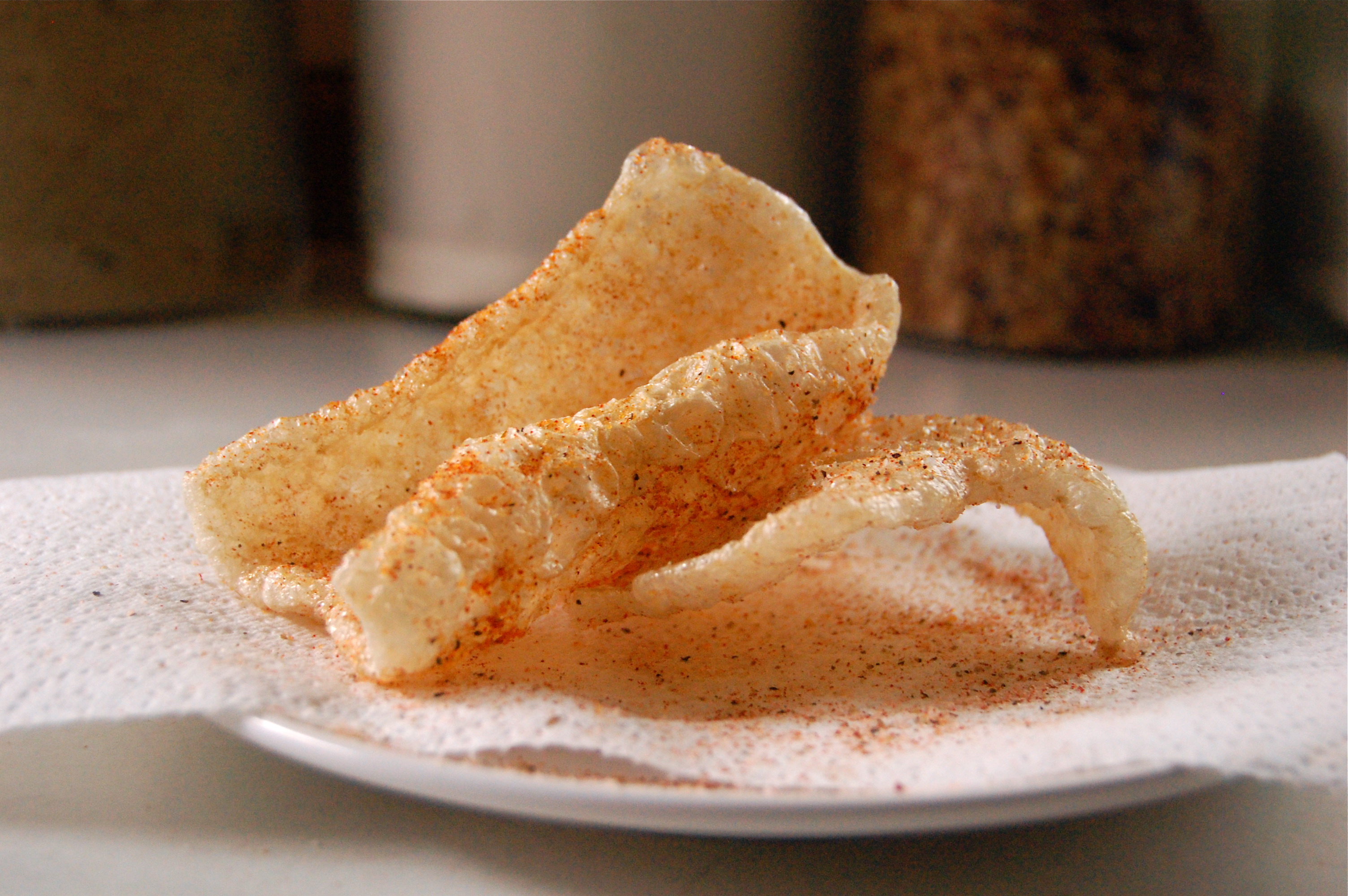
It was magnificent to see you puff up to 5 times your size. I like to think that was you swelling with love.
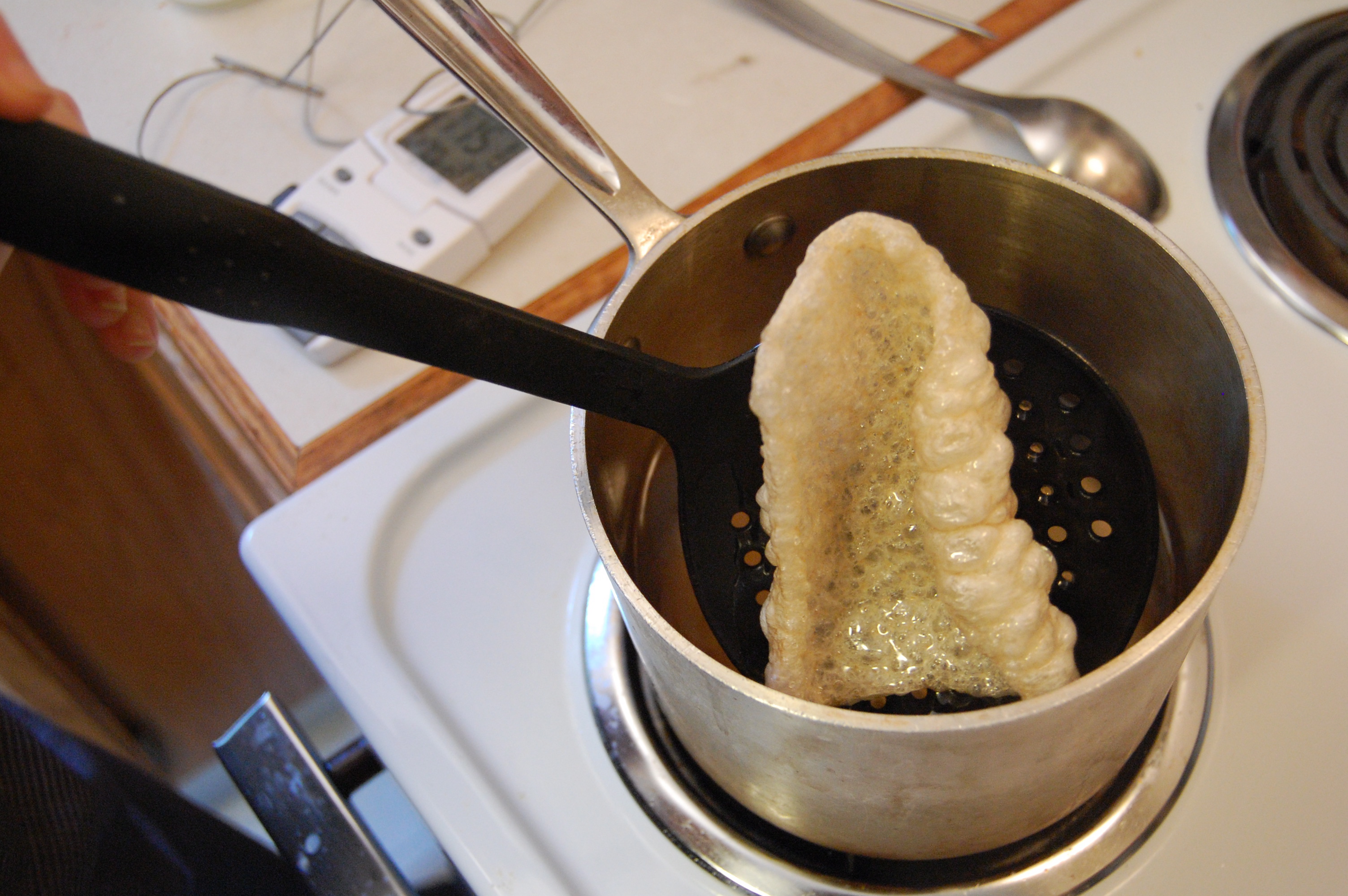
I tossed you in a spice mix I had prepared earlier. And you were glorious. Light, fluffy, melt in my mouth glorious. You were a lot of work, but Pork skin, you were worth it. Thank you.
Spice Mix recipe:
1/2 tsp paprika
1/2 tsp cayenne
1/4 tsp black pepper
1/4 tsp cumin
1/4 tsp white pepper
1 TBSP salt
1 TBSP sugar
Jambalaya!
This isn’t really a post. It’s more like a mention, because this was the tastiest jambalaya I’ve ever made. I didn’t really take photos, mostly because the beauty of cooking jambalaya is that everything just gets thrown into one pot (preferably an extremely large one). So it’s not the most interesting process, but it is a fantastic dinner.

This is basically John Besh’s recipe, from his new cookbook (which makes me want to hit up the state of Louisiana something fierce). I only changed a few things, mostly not using converted rice (uncle Ben’s) and omitting the celery salt. Because celery salt makes me uncomfortable. Not sure why.
Shrimp, Chicken and Andouille Jambalaya Recipe:
Serves 6-8
12oz andouille sausage, diced
8oz fresh pork sausage, removed from casings
8oz bacon, diced
1 oz butter
2 boneless, skinless chicken thighs
Salt, to taste
Black pepper, to taste
2 celery stalks, diced
1 large onion, diced
1 green bell pepper, diced
3 garlic cloves, minced
1/2 tsp dried thyme
1 dried bay leaf
2 1/4 tsp paprika
1/2 tsp cayenne pepper
2 1/4 cups white rice
1 15oz can crushed tomatoes
2 1/2 cups rich chicken broth
1 1/4 lb shrimp (preferably Louisiana white), peeled and deveined
– Preheat a large cast-iron pot over high heat. Lower the heat to medium and add the sausages, bacon and butter. Cook the meat as evenly as possible, stirring slowly, until the fat is released.
– Season the chicken with salt and pepper, add it to the pot. Once the chicken has browned, about 5 minutes, add the onions and cook for 15 minutes. Add the bell pepper, celery and garlic. Continue to stir, allowing the ingredients to brown without burning, about 5 minutes.
– Add the thyme, bay leaf, paprika, cayenne, and rice. Keep stirring for 5 to 7 minutes over medium heat.
– Add the tomatoes and broth, raise the heat back to high until the liquid boils, and then cover and reduce to a low simmer until rice is almost cooked through, about 25 minutes.
– Season the shrimp with salt and pepper, and add them to the pot. Keep the pot covered for an additional 10 minutes before removing from the heat. Season to taste.
Meyer Lemon Candy Happiness
There are two types of cooks. First there are those that burn through recipes and techniques, dipping their toes in many different things and gaining all different kinds of loose intuitive knowledge. Then there are those who master the art of perfecting whatever they are into at the moment. They tinker and tinker with the same dish until they have it down to a science.
I am very much not the second type. I’ll just go right ahead and say it: I have a short attention span. It’s rare that I’ll do anything twice, no matter how much I like it. Vacations, restaurants, recipes: I’m always curious about whether there’s something more fun, so repeats don’t happen often. It’s weird, if you ask me to list the best restaurant meals of my life, I’ve probably never been to any those places twice. I can’t help it!
But. Every now and then, I get presented with an opportunity to get completely OBSESSED with one thing. It usually means I have no choice, or I’m fighting a string of particularly bad luck with a dish. Right now, the stars have aligned and it’s all candied citrus peels. We have this dessert on the menu at Delancey, a meyer lemon budino. A yummy rich lemon cream that is (thankfully) being well received. The cream uses a ton of meyer lemons, but mostly just the juice. After seeing piles and piles of lemon rinds being tossed, I started hoarding them. If there was ever a time to candy citrus, then THIS was it.
You see, tucked away in my brain’s recesses was a desire to perfect the technique of candying citrus. I know it’s not exactly hard, but I seem to have a very high standard. I dream of these perfect little gummy peels, flexible and soft, evenly coated with sugar, chewy when you bite into them, and not a trace of bitterness. For something that only has 3 ingredients, I had a hard time finding a way to consistently get perfect candy. But after about 5 rounds with the peels (that would be 5 weeks worth of budino scraps), I am proud to report that I’ve finally got it. What I think is the perfect technique for candied citrus.
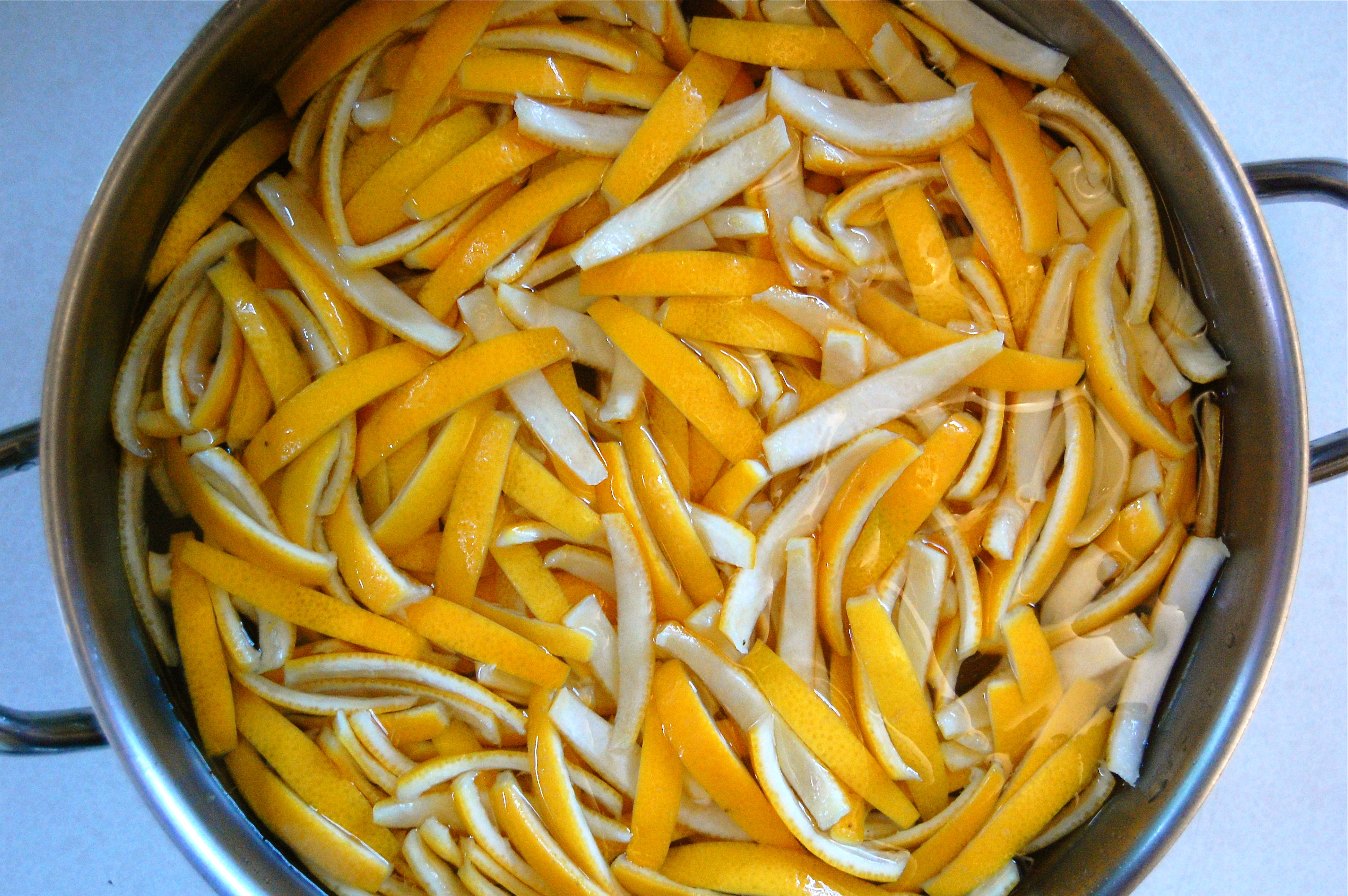
First I sliced up my peels to the ideal size. Then I placed them in cold water and brought that to a boil. As soon as the water boiled, I drained them out. I did this 3 times, rinsing the heat out of the peels between each blanch so that they always started in cold water (without rinsing they will warm the water up immediately). This step helps remove the bitterness from the remaining pith.

Then I made a simple syrup of equal parts (in volume) of water and granulated sugar. I made just enough to cover the peels by 1/4″ or so in the pot. I brought them to a bare simmer (not a full boil) and let them poach for 4 hours. I checked them for doneness by pulling out a peel and holding it up the window. I want to be able to see through it. Then, I take the peels off of the heat and place the whole pot in the fridge. I leave them there, covered, for 2 days. It may seem excessive, but I’m convinced that this part gives the peels the delicious gooey soft texture I like. Obviously they can be stored in their liquid (refrigerated) as long as you like, think of 2 days as a minimum soaking time.
Once they’ve soaked, I laid them out on a drying rack over a sheet pan. This is the part where I had my epiphany. Previously, I had simply left the pans out for a couple of days to dry out. After several batches of not guessing the right time (not long enough and the sugar they get tossed in will clump up and become hard and crusty; too long and they get hard and lose their gummy bear texture) and getting extremely frustrated with the humidity in Seattle, it finally hit me: put them in the oven. Duh. So I did just that. And after about 2 hours at 180 degrees, they came out perfect for tossing.

I tossed them in superfine sugar and sealed them away in a tupperware. Supposedly they’ll last a month or so like this, but they’ve never actually lasted that long in my house…

My Own Little Land of Milk and Honey
This one makes me very happy.
Have you ever known someone who is a panna cotta fanatic? Having a slight aversion to gelatin-based things, I’ve never really understood it. But people who love panna cotta, they REALLY love panna cotta. John is one of those people. So it seems like I would make it all the time. It’s super easy, just a little advance planning needed for it to set up in the fridge. But how many times have I made it? Once. Last summer. I tend towards puddings and mousses, but I’m not really sure why. After this panna cotta, I think that is going to change. It’s winter here in Seattle, so I’m exploring the flavors available. As much as I loved my little pop tarts and poached apples, I’m feeling the need to branch out from the abundance of apples here. And what’s a beautiful flavor available all year round? Honey. Sticky sweet honey. And thus, I wanted a milk and honey dessert. A panna cotta dessert. I actually did 2 batches, one with milk and another with buttermilk. As much as a liked the tang of the buttermilk, I was really feeling the contrast between the pure vanilla milk flavor and the acidic honey.
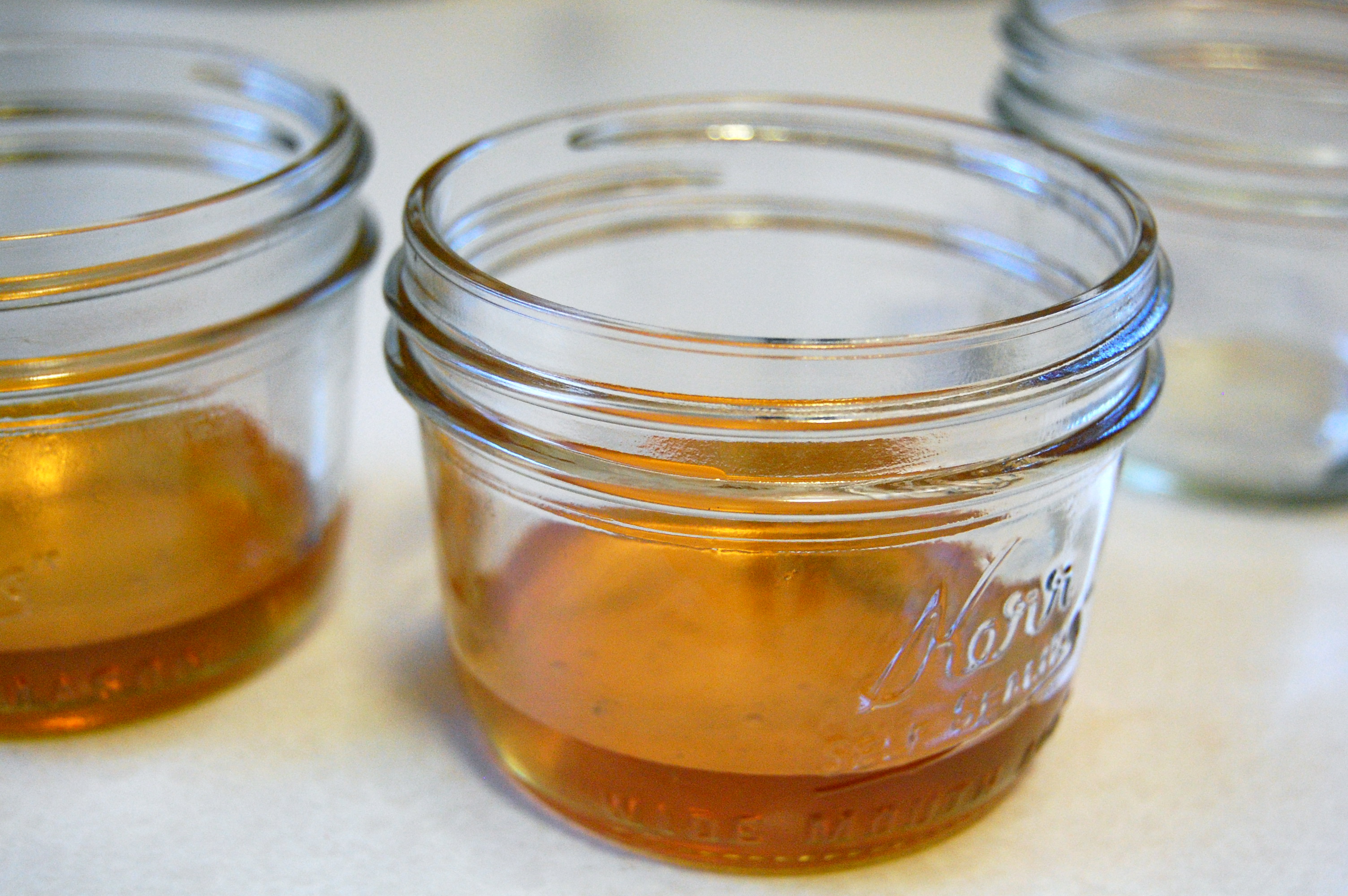
I wanted textures in this dish, so I poured some honey into the bottom of my dishes, so that when I dug my spoon in later, I would get a nice bit of liquid with the panna cotta.
I started making the panna cotta by steeping my cream with a vanilla bean and some sugar.
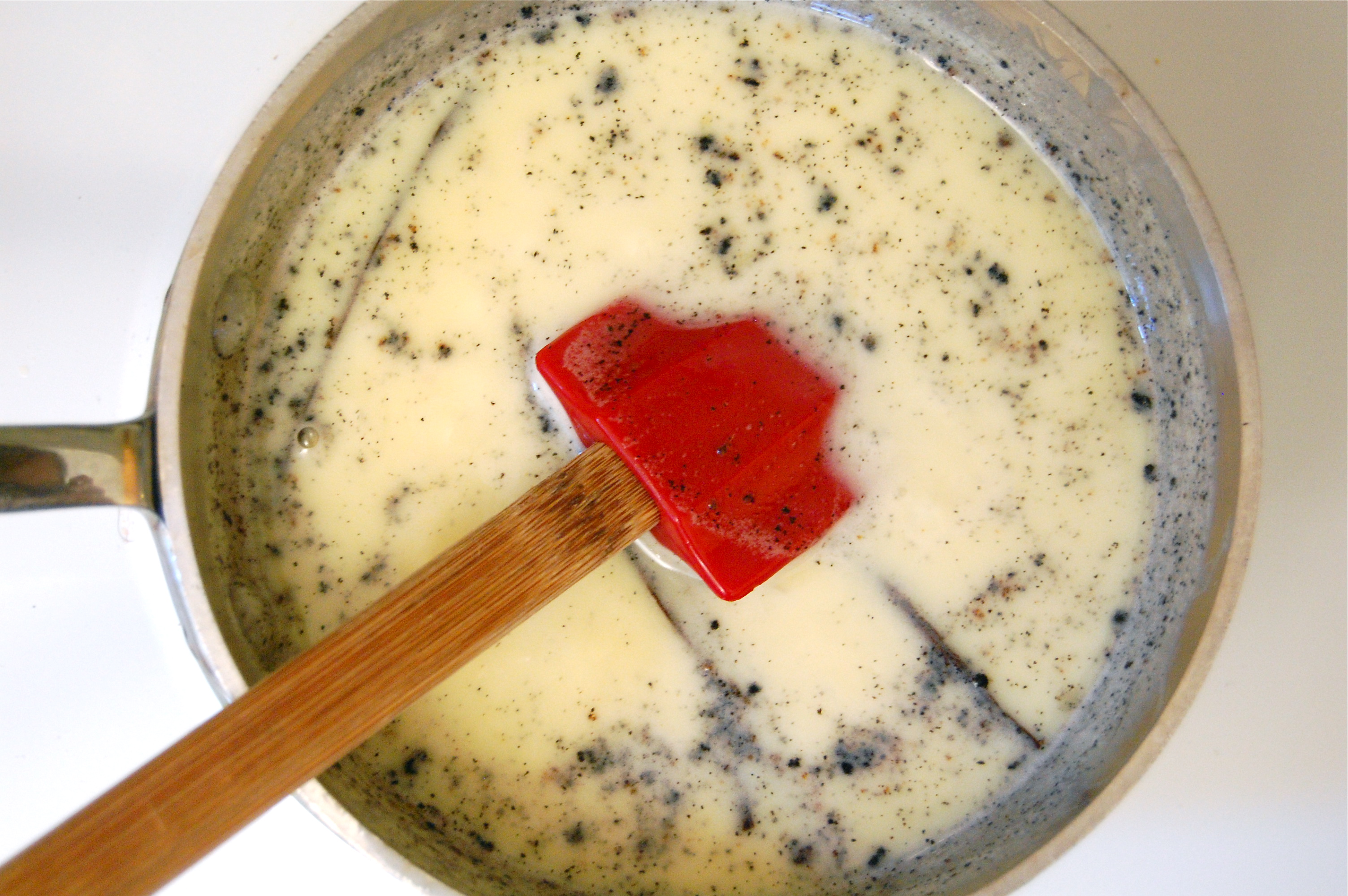
Then I softened the gelatin and mixed that in with the steeped cream mixture. I strained that into some milk and placed the container in the fridge to chill. I did this so that I could stir the vanilla seeds around as it started to thicken, to keep them from falling to the bottom before the panna cotta set. Once it was chilled and starting to thicken, I poured it onto the honey.

I let the panna cotta finish setting up in the fridge, maybe 4 hours or so, before making a honey gelée. I poured that on top of the panna cottas and let them chill for a couple more hours.

Once the gelée was set, I sprinkled on some chunky sea salt. And then me and John went to town on these guys. And they were delicious. The salt cut through the sweetness, and the different layers and textures made me very happy indeed. And needless to say, John was pretty pleased as well.

Honey Panna Cotta Recipe:
3/4 cup honey
Panna Cotta:
1 1/2 cups milk
1 1/2 cups heavy cream
1 vanilla bean
1/2 cup sugar
2 tsp gelatin
1/4 cup water
Honey Gelée:
1/2 cup honey
1/2 cup water
1 1/2 tsp powdered gelatin
1/4 tsp salt
– Put 2 TBSP of honey in bottom of 6 dishes and put in fridge.
– For the Panna Cotta, combine sugar, vanilla, and heavy cream in a saucepan over medium heat and bring to a boil. Turn off the heat and let steep for 20 minutes.
– Pour 1/4 cup water in a small bowl. Sprinkle on powdered gelatin and let sit for a few minutes to soften. Add this to the heavy cream mixture and stir well to dissolve.
– Add the milk and stir well. Strain mixture into a container with a spout.
– Put container in fridge until cool, stirring every 10 minutes or so so redistribute the vanilla seeds.
– Pour mixture over honeyed containers and cool in the fridge until set.
– For the gelée, pour 1/2 cup of water in a small bowl. Sprinkle on powdered gelatin and let sit for a few minutes to soften.
– Pour honey in saucepan over medium heat. Add gelatin mixture and stir to dissolve. Add salt. Place in fridge to cool, stirring to make sure it doesn’t set.
– When cool, pour over panna cotta. Place in fridge and let chill until set.
– Before serving sprinkle with chunky sea salt.
Homemade Pop Tarts!
For the record, I am so tired of listening to myself talk about how tired I am. Lately it is so hard finding the inspiration to get into the kitchen and cook. Which is weird, because it is prime baking weather: dark, grey, wet. I should be tearing the kitchen apart. But instead (when not tearing up Delancey’s kitchen), I find myself slouched in front of the TV watching reruns of 90210. But a couple of days ago, I was hit hard (thanks Huong!) with an idea: homemade pop tarts. Bite-sized fruit-filled flakey happiness. OK, I know traditional pop tarts aren’t flakey, but if I’m gonna recreate, why not improve? Since it’s apple season galore in Washington, I decided to go with that as a filling.
I made a pie dough using the smear technique, making butter chunks a little smaller than usual. My goal was to have a flakey dough, but to keep the flakes a little tight. I also wanted to keep the apple filling really bright, so I decided to put the cinnamon (because you can’t have apple pop tarts without cinnamon) in the dough.

While my dough rested in the fridge, I started working on the apple filling. I diced the apples up pretty small in hopes of having a flatter pop tart.
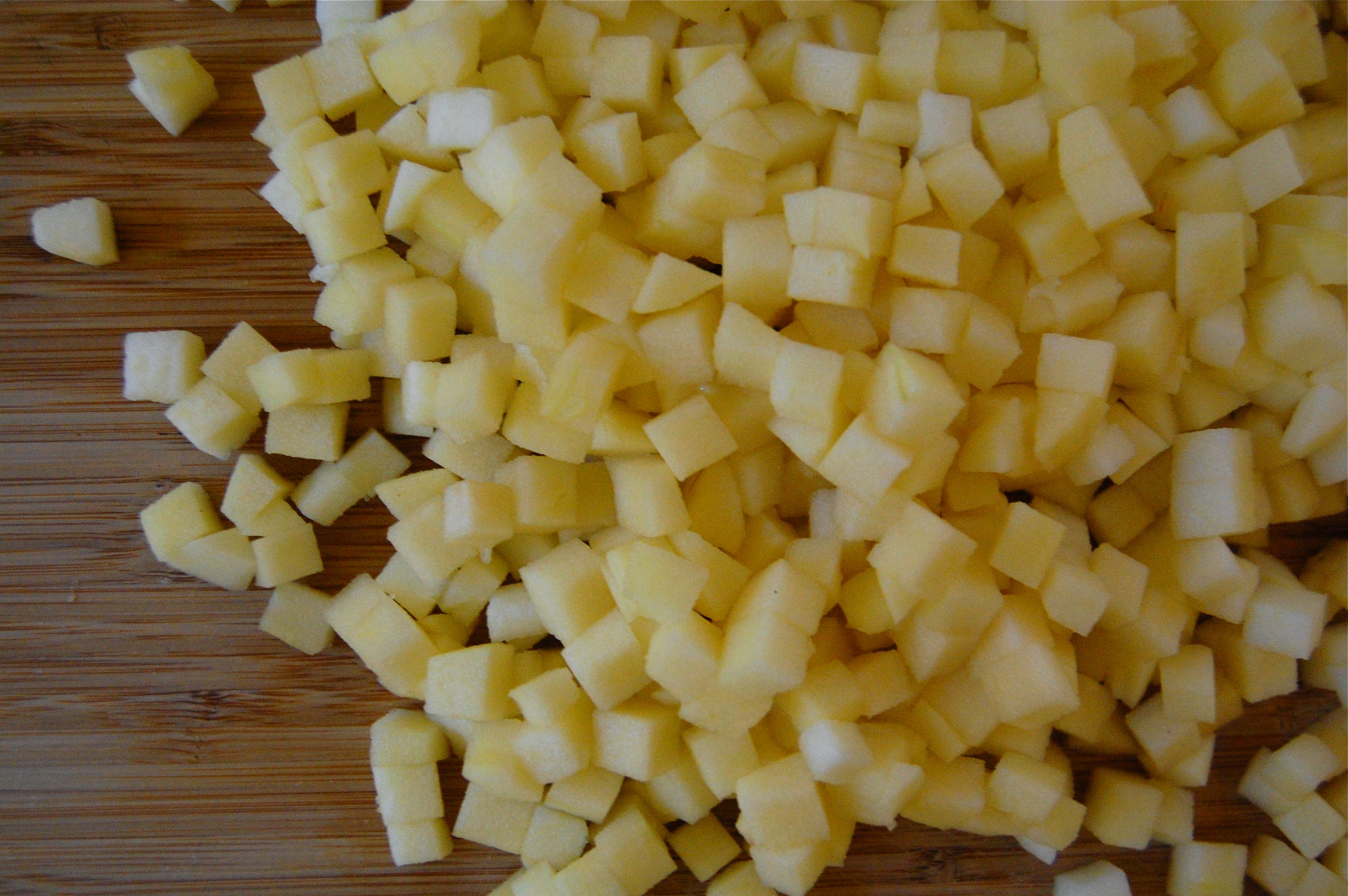
Then I sauteed them in butter, sugar and vanilla. After they started to take on a bit of color I poured in some apple cider. I cooked them on medium high heat, until the cider reduced to a glaze. I poured the cooked apples on a tray and placed them in the fridge to cool.

I rolled the dough pretty thin (slightly under 1/8″) and sliced it into squares. I piled some apples onto half of the squares.

I cinched the two pieces together with a fork and poked holes in the top. I brushed butter on and popped them into the oven.
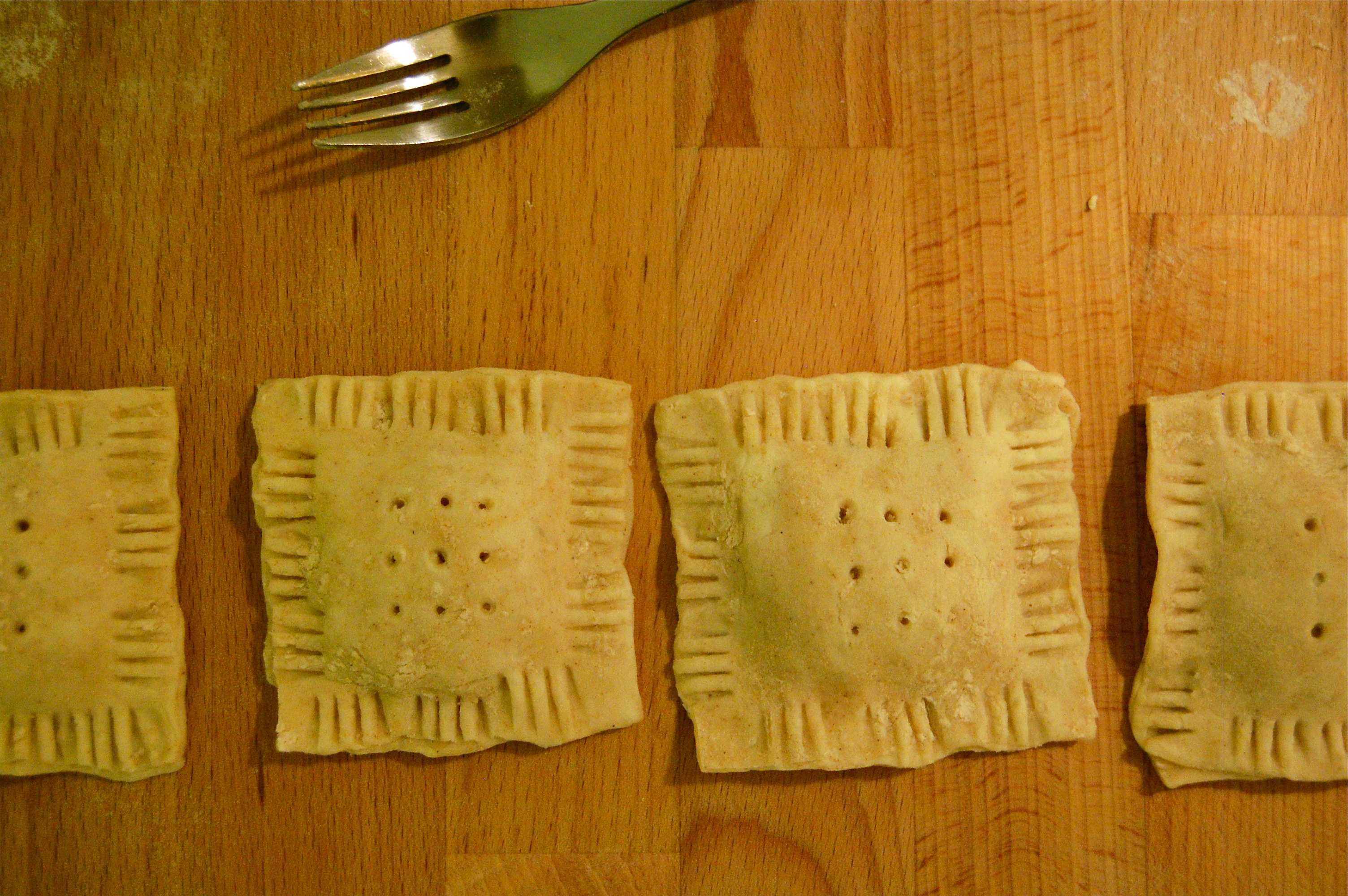
I baked them until they were golden brown and let them cool while I made the glaze. Which was hard because they smelled like pure heaven.

I poured on a glaze of powdered sugar and apple cider and let it set up. And then me and John tore into these little flake bombs. He says they remind him more of toaster strudels, but I will admit that I have never experienced one of those. Either way, I am very excited that I finally got my butt back in the kitchen. Because these guys were worth it.

APPLE POP TARTS RECIPE:
Dough:
9 oz pastry flour
1/2 tsp salt
1 tsp sugar
1/4 tsp cinnamon
6 oz cold butter, chopped
3 oz water
– Mix dry ingredients in a bowl. Dump onto pastry board.
– Place half of the butter on the flour mixture. Using a bench scraper, cut the butter into the flour until it is pea sized chunks.
– Place the other half of the butter onto the flour mixture. Using the bench scraper, cut the rest of the butter into the flour until it is in bean sized chunks.
– Use fingers to flick the water into the flour mixture while tossing it around with the bench scraper. Keep sprinkling until it comes together in a shaggy pile. It should hold together as a dough when pinched.
– Using the heel of your hand, smear the dough on the pastry board. This creates sheets of butter in the flour, which turns into gorgeous flakes in the oven.
– Smash the dough into a disc, wrap it in plastic and place it in the fridge to rest.
Filling:
3 medium apples, diced into 1/4″ pieces
2 oz butter
1/2 vanilla bean
2 TBSP sugar
1/2 apple cider
– Heat the butter and vanilla bean seeds in a skillet over medium heat. Add the apples and sugar and cook until the apples start to take on a bit of color.
– Add the cider and cook over medium high heat until the cider reduces to a glaze.
– Spread the apples on a sheet pan and place in fridge to cool.
Assemble and bake:
– Preheat oven to 400 degrees.
– Roll out the dough and slice into squares.
– Spoon piles of apples onto half of the squares.
– Cinch edges together with a fork and poke holes in top.
– Brush on melted butter and bake until golden brown.
– Cool.
Glaze:
– Mix 3/4 cup powdered sugar with 2 tablespoons of apple cider. Whisk together and pour into cooled pop tarts.
Caramel Poached Apples
Yep. I’m officially neglecting my blog.
But I’m gonna try harder! After spending a huge portion of my brain thinking up dessert fabulousness for Delancey, I’ve been neglecting ME. I just haven’t been cooking much, at least not much that inspires cataloguing and sharing with the people of the interweb. So today I decided to merge worlds. In Washington pear season is pretty much over now (is it this short in California?) and it’s apples as far as the eye can see. I’ve been seeking out a winner apple dessert for weeks and the results have been pretty lukewarm at best. I’ve been looking for something uncomplicated, a way to celebrate the apple without covering it up with other flavors. Today I got it: Caramel Poached Apples.
I started by heating up some locally made apple cider with cinnamon and star anise.
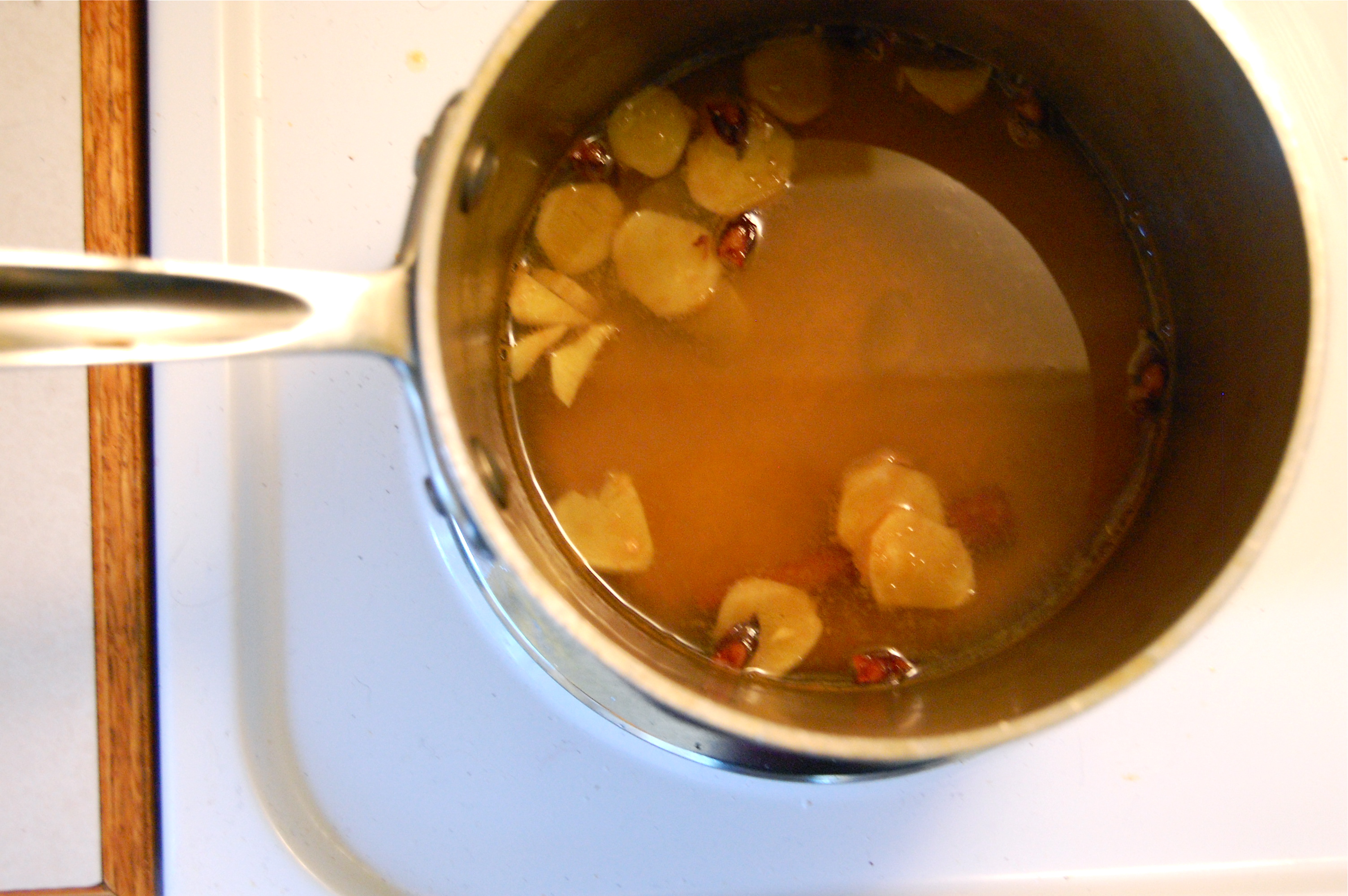
Meanwhile I started sugar boiling for a caramel.
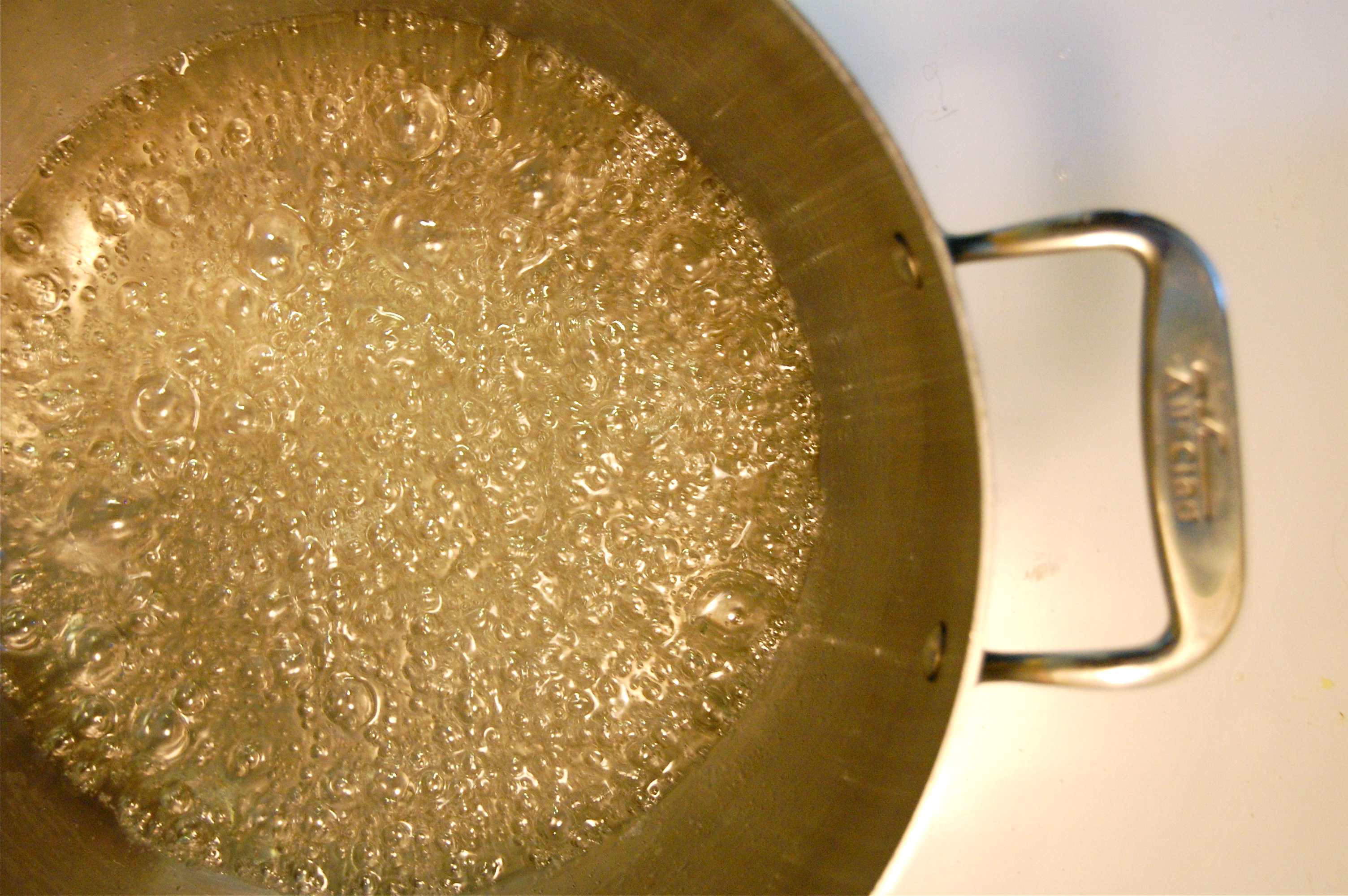
When the sugar caramelized, I added the hot cider mixture. I let that steep with the spices for 20 minutes.

While the cider caramel was steeping, I prepared the apples for poaching. I peeled them and cored them from the bottom, leaving the top stem intact. This was a bit tricky, since I wasn’t using gigantic apples. I ended up digging out its innards with a 1/4 teaspoon.

I placed the apples in the caramel, which I had thinned with more cider, some white wine and lemon juice and flavored with a vanilla bean and a bit more sugar. I poached the apples until they were fork tender, flipping them halfway since I didn’t make enough poaching liquid to cover them (oops!).
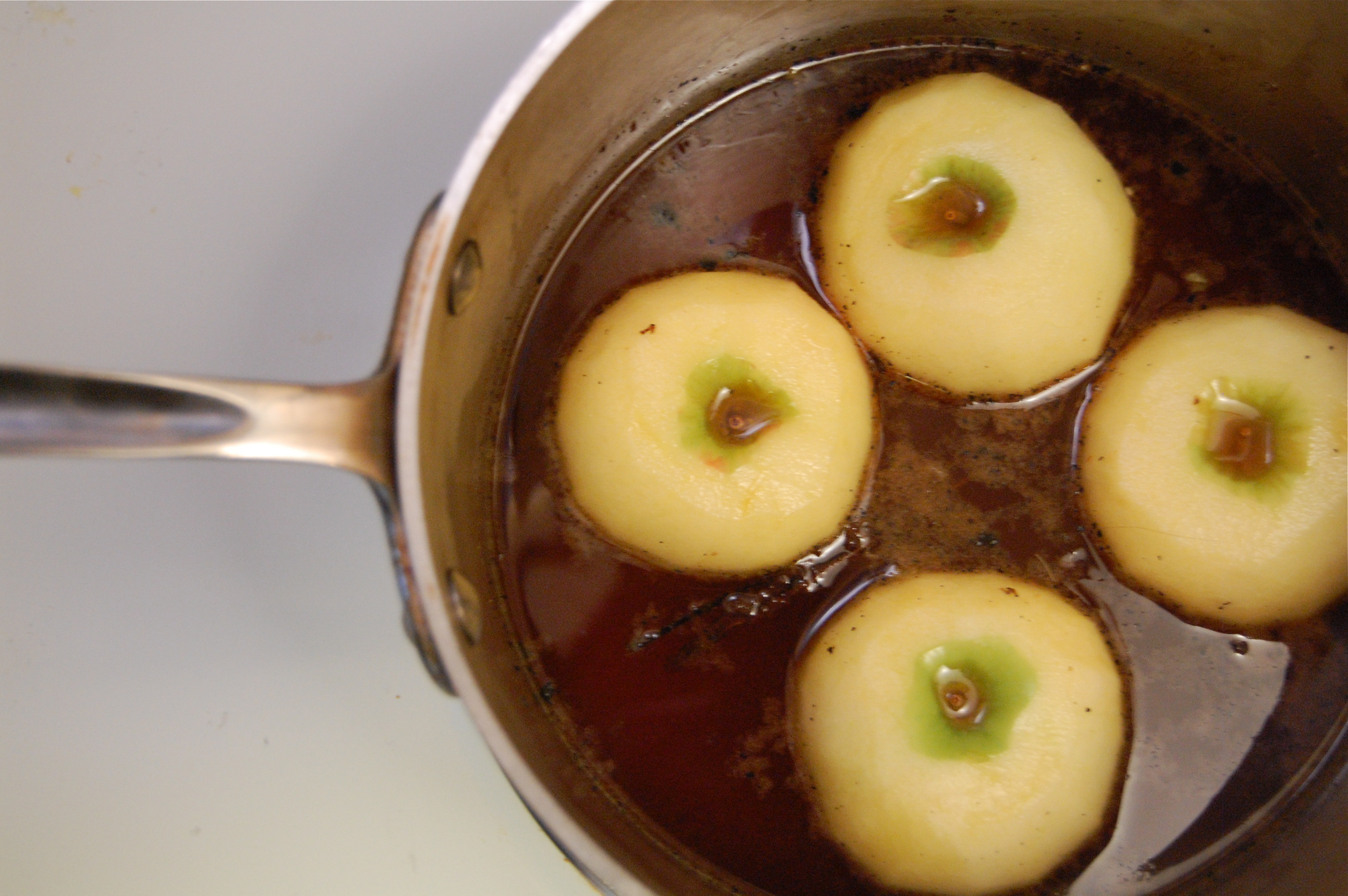
But oh my, they were good. Since I’m not big on boozy desserts, I’ve never been huge fan of poached fruit. They always just taste so…soaked in alcohol. But this tasted like heavenly, caramelly goodness all the way through to the apple’s core, well if there was still a core. Now I just need to dream up something crunchy to pair with these little apple caramel bombs.

CARAMEL POACHED APPLES RECIPE (adapted from Sherry Yard):
3 cups sugar
1 cup water
1 1/2 cups apple cider
3/4 cup water
6 TBSP sugar
2 TBSP sliced peeled ginger
1 cinnamon stick
2 star anise
4 medium apples, peeled and cored
1 1/2 cup apple cider
1 1/2 cup white wine
1/4 cup sugar
3 TBSP lemon juice
1 vanilla bean, split and scraped
– Put 3 cups sugar and 1 cup water in large pot. Heat on low, stirring until the sugar is melted. Turn heat up to medium and let boil, undisturbed.
– Meanwhile put 1 1/2 cups apple cider, 3/4 cup water, sugar, ginger, cinnamon stick, star anise in a small pot and bring to boil. Set aside.
– Once the boiling sugar turns amber, slowly add in the hot cider mixture. Cover and let steep for 20 minutes. Strain out spices.
– Add the 1 1/2 cup apple cider, white wine, 1/4 cup sugar, lemon juice and vanilla bean to the caramel. Add the apples to the poaching liquid. Place a sheet of parchment on top and weigh down with a plate. Heat on medium low, bringing to just under a boil. Poach until fork tender.
– Remove apples from liquid and eat immediately, or place back in liquid once it has cooled (to keep the apples from overcooking).
– Goes great with whipped cream.
English Toffee
This year I didn’t do much holiday baking. I flew home on Christmas Eve, and there wasn’t much time for hanging in the kitchen. But for some reason, I kept finding time for making toffee. As in, I became slightly obsessed with making toffee. I couldn’t stop it, I’d make a batch, and then everyone would devour it, forcing me to make another. I don’t normally repeat cook (short attention span), but I was just feeling it I guess. The thing is, by making batch after batch of toffee, I started to figure some things out that I hadn’t noticed last year. The most important thing being: actually use a thermometer. This may seem common sense to other candy makers out there, but it was a revelation for me. More on that in a bit.
I started by putting melted butter, sugar, salt and water in a pot and cooking (stirring constantly) over medium to medium low heat. This was another thing I learned around batch #3: Too high of heat makes it cook unevenly, scorching in spots, and also affects the texture negatively. I’m not sure why, my only assumption is that a lower heat allows the water to evaporate out before it reaches the right temperature. Once the mixture reached 260 degrees I added some of the nuts (I used pecans on this batch) and continued cooking.

When it reached 305 degrees, I poured it onto a sheet pan that I had oiled. The 305 being the most important part of that step. Thermometers. Who knew? I tend to be a little loosey-goosey with temperatures, preferring to rely on colors, smells, and textures to guide me. In the case of toffee, that’s not to say that I don’t PUT a thermometer in the pot while the candy is cooking. It’s just that when it reaches the appropriate temperature, I keep cooking it. Why? Because I like alot of caramelization. I tend to go dark on a lot of things, which you would know if you’ve eaten any of my pies, crisps, toast, cookies or caramel sauces. I love that just-before-burnt flavor. But toffee, it turns out, does not want to be caramelized. At around 305 degrees, the candy is at just the right place to spread out in a thick mass. Further cooking does result in a darker and slightly more bitter toffee (yumm), but it also gives you a thin toffee with a not so awesome texture. As in, it sticks in your teeth and is just not pleasant to chew (and pick out of your teeth for the rest of the day).

After it cooled completely, I broke it into chunks.

The traditional way to make it is to score it while it’s still warm and then break it into neat pieces before dipping them into melted chocolate. I’ve found that a) I don’t really care about the neat shapes, because I want to eat the toffee PRONTO and b) since I use good chocolate, there ends up being way too intense of chocolate flavor for the amount of toffee. So my process is to just melt some chocolate down and plop it on the individual chunks. Before it re-solidifies I sprinkle on chopped nuts and let it finish cooling. Another lesson I learned on this toffee marathon: It gets better after several hours. This is a hard one, because it’s torture to resist the toffee’s call while it’s resting. But it’s worth it. When it’s fresh it’s kind of brittle, and the sugar flavor is most prominent. After a few hours, the texture softens and the butter flavor comes through.

ENGLISH TOFFEE RECIPE (adapted from “Truffles, Candies & Confections” by Carole Bloom):
2 TBSP canola oil
10oz unsalted butter
1 cup sugar
1/4 cup water
1/2 tsp salt
1 1/2 cup almonds or pecans, finely chopped
3oz chocolate, finely chopped
– Coat a baking sheet with the canola oil and set aside.
– Melt the butter in a 3-quart heavy-bottomed saucepan over low heat. Add the sugar, the water and the salt; increase the heat to medium and cook until the mixture registers 260°F on a sugar thermometer (about 10 minutes), stirring constantly with a wooden spoon or heatproof spatula.
– Add 1/2 cup of the nuts and continue cooking until the mixture becomes golden and registers 305°F on the thermometer (about 8 minutes) stirring constantly. Remove the pan from the heat and carefully pour the mixture onto the oiled sheet pan. Let cool completely.
– Break the toffee into chunks.
– Melt (and temper if you’re up for it) the chocolate. Spread the melted chocolate on the toffee chunks.
– Sprinkle the remaining almonds onto the toffee and let sit until the chocolate is set.
Well Hello, Cute Little Butterscotch Pudding Tarts
This one had me with the oat wheat crust. I know, not a typical starting point for feeling giddy about butterscotch, but I was so intrigued. Oats in a pate brisee? With brown sugar? And whole wheat flour? It sounded like a divine mess and I had to have it.
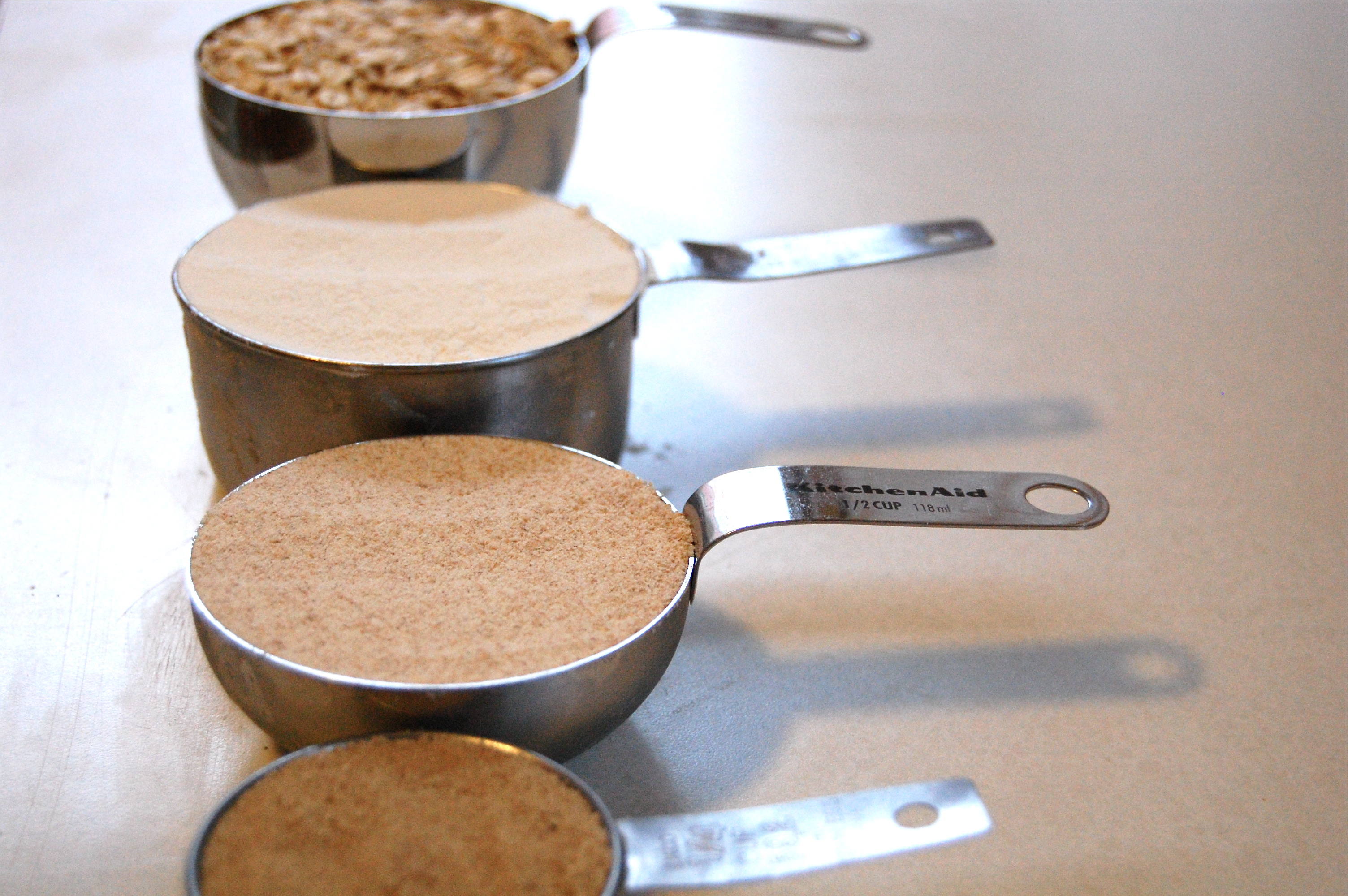
I was so smitten that I even did the unthinkable (in my dough snobbery world), I pulsed the dough in the food processor. Sin! But I was feeling it. It was what the authors said to do, so I was trusting them. Just this once. And I have to say it was a little tricky. I err on the side of large butter chunks, and was nervous about pulverizing the beautiful oats. But this recipe doesn’t have a lot of liquid. Translation: if I didn’t incorporate the butter well, the dough would be dry. And it was. So here’s what I learned: Next time I will put half of the butter in the machine with the flour, sugar and salt. I will work that in really well to coat the flour. I will then add the rest of the butter and oats and just barely pulse those in to give me the texture I want. I will also use pastry flour next time, because I found the crust to be not quite as tender as I like.
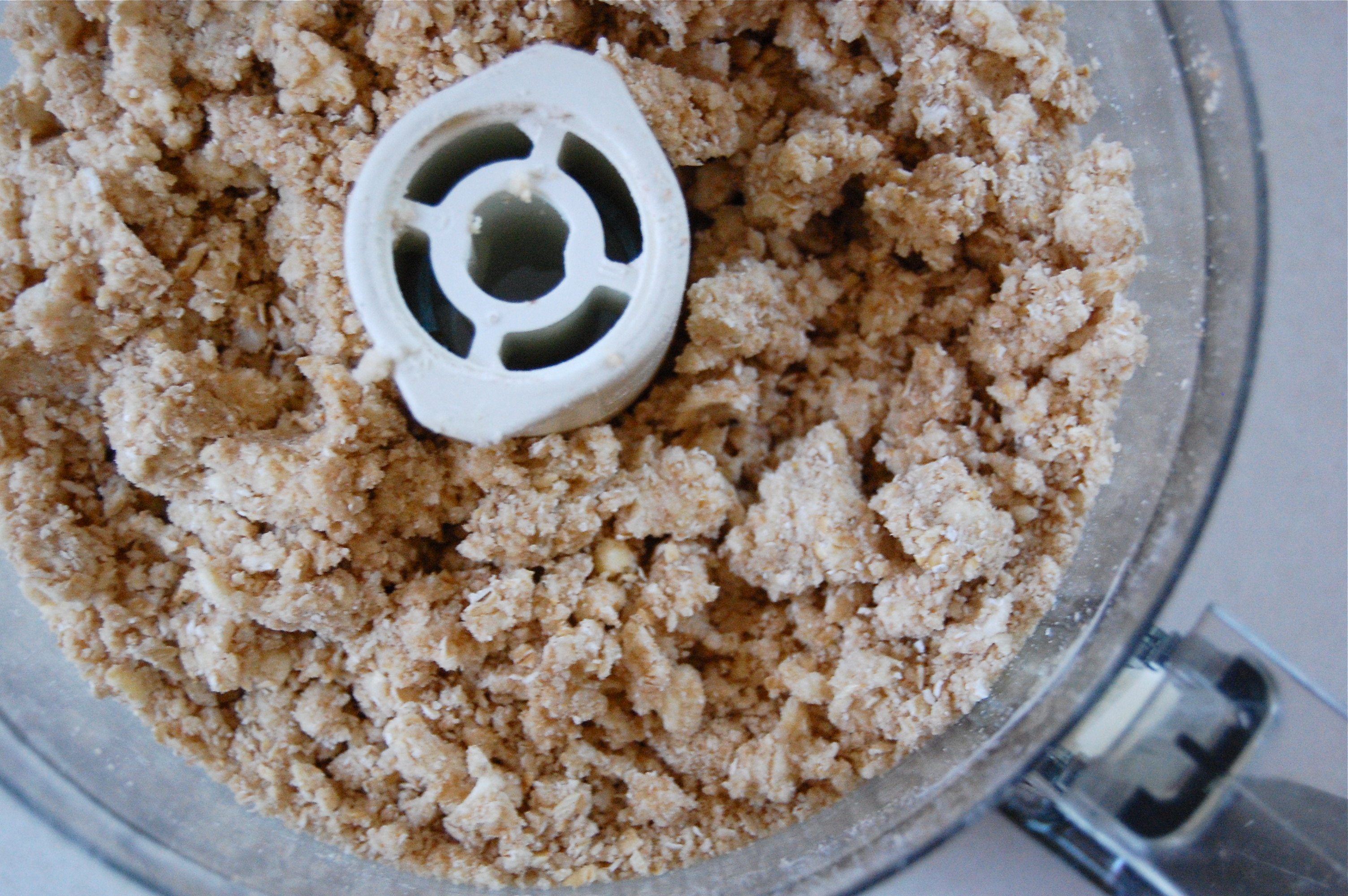
Since my dough was a tad dry, it was a bit of a pain to press into the shells, but I got there eventually.

While the shells were relaxing in the fridge, I got to work on the butterscotch pudding. The other thing that made my ears perk up about this recipe was the pudding. Most butterscotch recipes just have you cooking brown sugar and butter until it takes on a caramelly flavor. Not this one, here you actually MAKE a caramel sauce and then blend that into a brown sugar and milk mixture. And the depth of flavor was so awesome! And vanilla bean, I am such a fan of real vanilla beans in lieu of vanilla extract. Oh my lord, it was pure torture not drinking the entire batch.
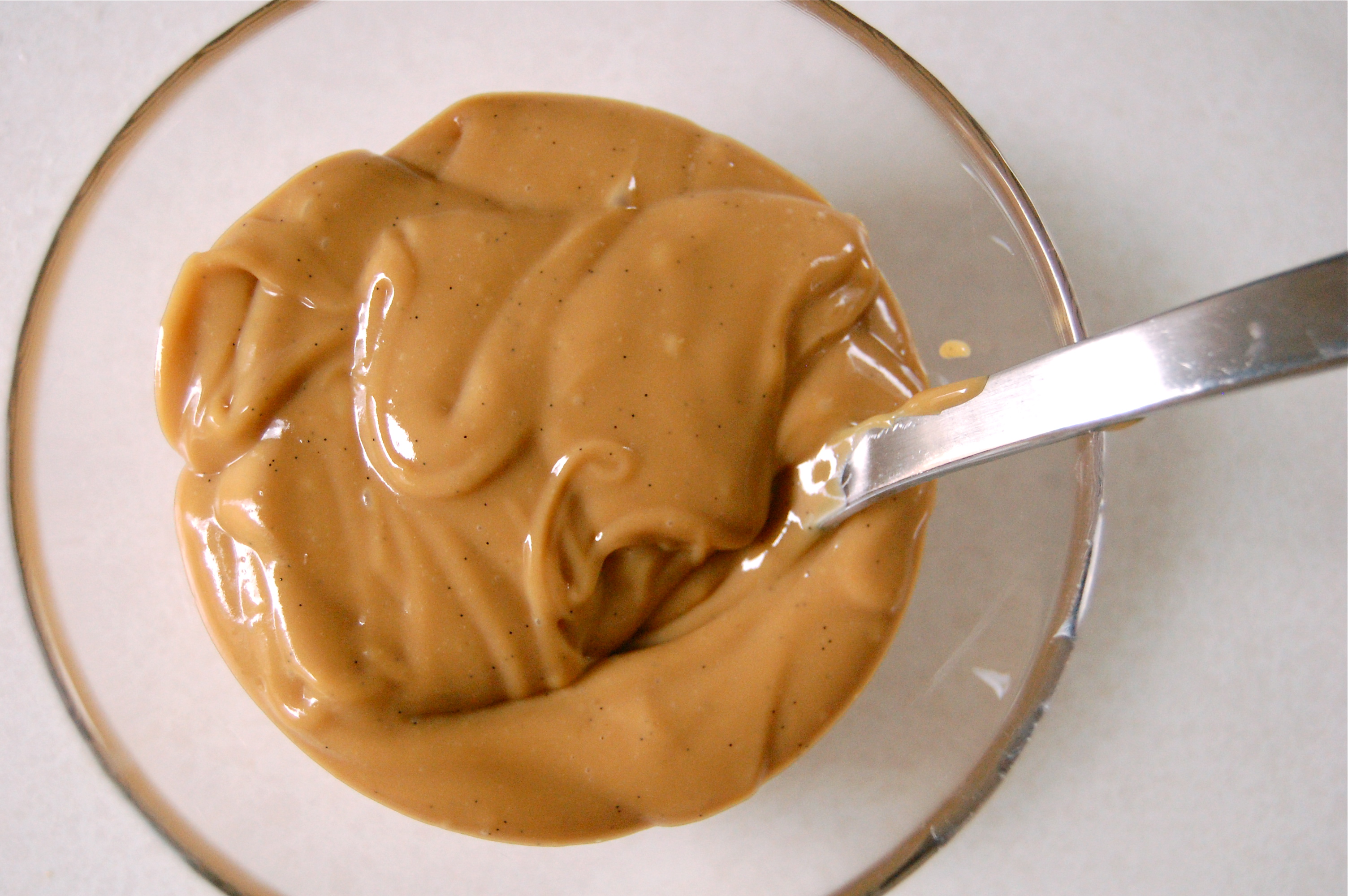
But I didn’t. I went back to the crusts, which by now had spent 30 minutes in the freezer to prep them for the oven. The instructions for this dough said to bake it for 12 minutes, but that was SO not long enough. I think I ended up baking these for 25 minutes to get a good brown. This was key, the caramelization of the brown sugar in the dough is what balanced out the oaty wheaty-ness. The recipe also said to bake them at 325, I’m thinking that they MUST have been talking about a convection oven, because that just doesn’t make sense. I ended up going with 350. I was a bit disappointed that once baked the shells developed not so tiny cracks on their bottoms.

Since giant holes are not good for puddingy fillings, I painted the insides with melted chocolate. This created a nice seal and in the end made for a nice counterpoint in the overall flavor.

And oh yes, we were some happy little campers when these puppies arrived on the table for dessert. While I will definitely adjust some of the technique for next time, I LOVED the flavor of these. The oaty flavor of the crust went so well with the sweetness of the filling. It sounds weird, but the combination reminded me of wheaties cereal. In a good way. Love it.

BUTTERSCOTCH PUDDING TARTS RECIPE (adapted from Baked: New Frontiers in Baking):
1 cup rolled oats
½ cup whole wheat pastry flour
1 cup pastry flour
¼ cup firmly packed dark brown sugar
½ tsp salt
6oz cold unsalted butter, cut into pieces
¼ cup whole milk
– Put the flours, brown sugar, and salt in a food processor and pulse until combined. Add half of the butter and pulse until the butter pieces are small and the dough looks crumbly, like coarse sand. Add the rolled oats and the rest of the butter in and pulse until the butter is mixed in, but still in decent sized chunks.
– Add the milk and pulse for a few seconds. Add a tad more milk if the dough is still dry.
– Scoop the dough out of the food processor and form it into a large disk. Wrap tightly in plastic and refrigerate for at least 1 hour.
– Dust a work surface with flour. Unwrap the disk of chilled dough and put it directly on the work surface. Cut the dough into eight equal pieces, about 2 1/2 ounces each, and gently shape each piece into a smooth disk. The dough will be sticky. Make sure to turn the dough over as needed and keep the working surface floured. Put the dough disks in the refrigerator for 10 minutes.
– Using a rolling pin, roll each dough ball into a 6-inch round just over 1/8-inch thick. Place a round over a 4-inch tart pan and very gently press the dough into the pan. Trim off the excess. Repeat with the remaining dough rounds. Use any excess dough trimmings to make a ninth tart shell or freeze for another time.
– Preheat the oven to 350F.
– Put the tart pans in the freezer for 30 minutes.
– Remove the tarts from the freezer, then arrange on a baking sheet and gently prick the dough with a fork.
– Bake on the baking sheet until golden brown, about 25 minutes, rotating the baking sheet halfway through baking time. Start checking for doneness after 20 minutes.
– Transfer the tart pans to wire racks and let cool completely.
– If there are large cracks in the shells you can paint them with melted chocolate to seal the crust.
For the Butterscotch Pudding:
6 large egg yolks
¾ cup granulated sugar
¼ cup heavy cream
½ cup firmly packed dark brown sugar
1/3 cup cornstarch, sifted
1 tsp salt
3 cups whole milk
1 vanilla bean
2 TBSP unsalted butter
– Put the egg yolks in a large heat proof bowl and set aside.
– In a small saucepan, combine the granulated sugar, and ¼ cup water and stir gently with a heatproof spatula. Brush down the sides of the pan to melt any loose sugar crystals. Cook over medium heat until the sugar is dissolved, then increase the heat to medium-high heat and cook until the mixture begins to turn dark amber color. Swirl the pan, if necessary, to create an even color, but do not stir. Remove from heat and use the heatproof spatula to stir in the cream. Pour the caramel into small bowl. Set aside.
– In another small saucepan, combine the brown sugar, cornstarch, and salt. Stir in the milk and whisk to combine.
– Add the seeds from the vanilla bean and the vanilla bean pod. Cook over medium-high heat, whisking occasionally, until the mixture comes to a boil. Remove from heat and add the caramel. Whisk together until combined, then slowly pour one third of the mixture over the eggs, whisking continually. Keep whisking the egg mixture and add another third of the hot milk mixture. Transfer the egg mixture back to the saucepan with the milk minute and, whisking the whole time, bring to a boil over medium-high heat. Boil for 3-4 minutes, or until very thick and a bit darker in color.
-Remove from the heat and whisk vigorously for about 1 minute to cool the pudding slightly. Let the pudding sit for about 15 minutes.
– Now that the pudding has cooled a tad, add the butter. This will keep the butter from losing it’s emulsion as it melts.
– Chill the pudding in the fridge for an hour, to thicken it. Stir every 10 minutes or so to release the heat.
– Whisk the pudding one more time until smooth. Divide the pudding equally among the tart shells and put them in the refrigerator for about 2 hours before serving. When ready to serve, garnish with some chantilly cream and chocolate shavings.


 I made that!

10 comments