I Grew That! And then I cooked it!
I’ve been debating about whether to share this part of my cooking world, out of worry that some might find it boring. But I just can’t hold back anymore, because my garden is fully intersecting with my kitchen now, and I suspect it’s only going to get more intense! So here it is: Since moving to Seattle, I have been gardening my little tush off. I signed up for a month long course at Seattle Tilth, ordered some seeds from Territorial seed company, hit the Home Depot store (many, many times) and I was off! First I planted perennials around my yard: a sour cherry tree, a pear tree, a meyer lemon tree (potted since they don’t love Seattle as much as I do), blueberry bushes, strawberries, raspberries, an artichoke plant and asparagus. Those won’t really produce much this year, as they’re busy building up their roots. But man is next year gonna be fun.
Once all of those plants were settled, I got to work on building veggie beds for my annuals. If you’ve spent much time in Seattle then you know that winter takes its sweet time passing the baton to spring. This makes for a shorter growing season than California, but a growing season that is JAM PACKED. I began in early March and after a couple rounds of spinach and arugula, things are in officially in full swing. It’s all so magical that I started taking photos of my bounty so I could prove it was really happening! So here’s my garden!
Beautiful (and spicy) french breakfast radishes.

Lots and lots of butterhead lettuce.
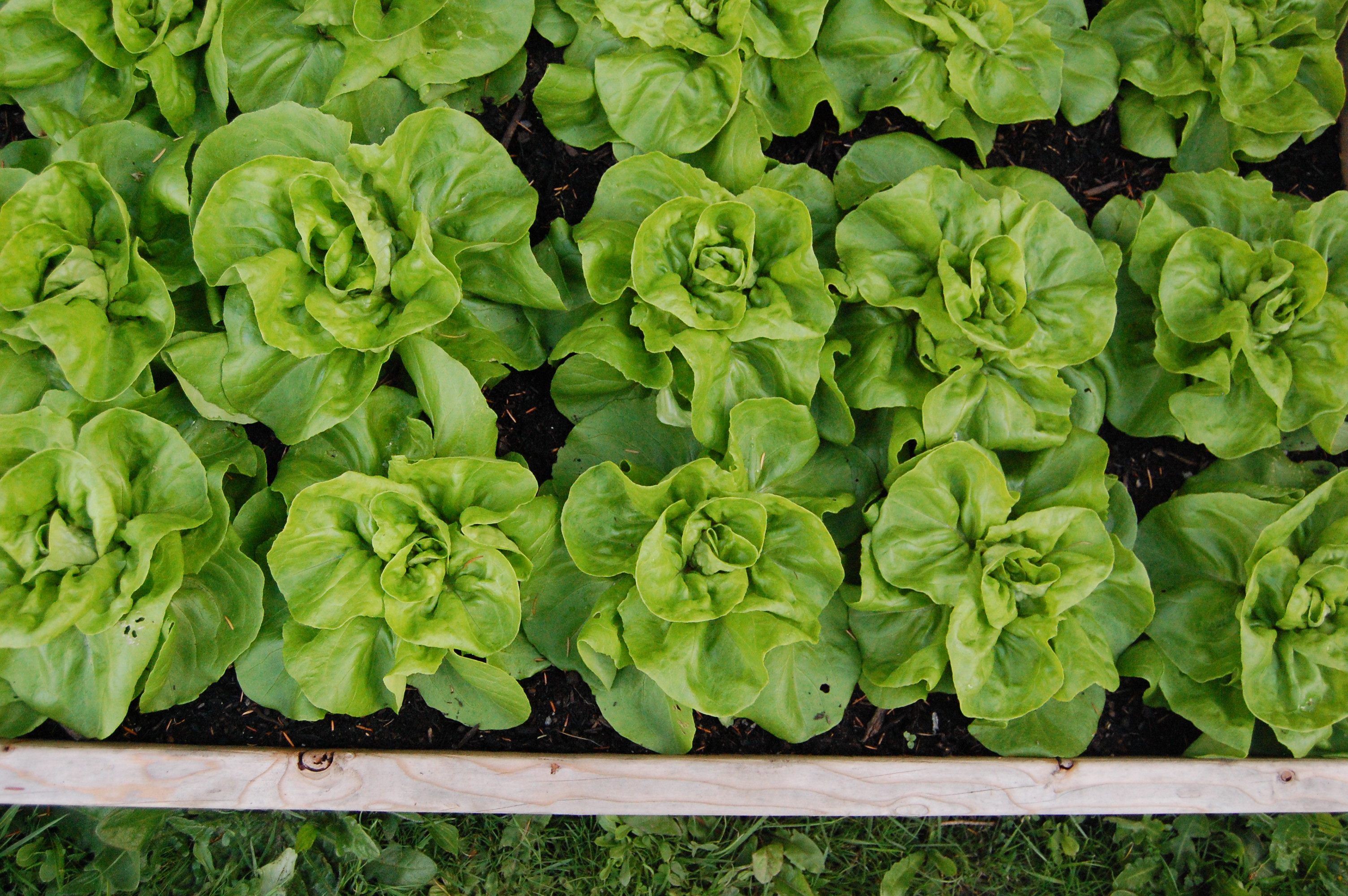
My first baby carrots!

Baby chiogga beets.

Russian banana fingerling potatoes!

And my personal favorite (which is great since we have them coming out of our ears now), English peas!
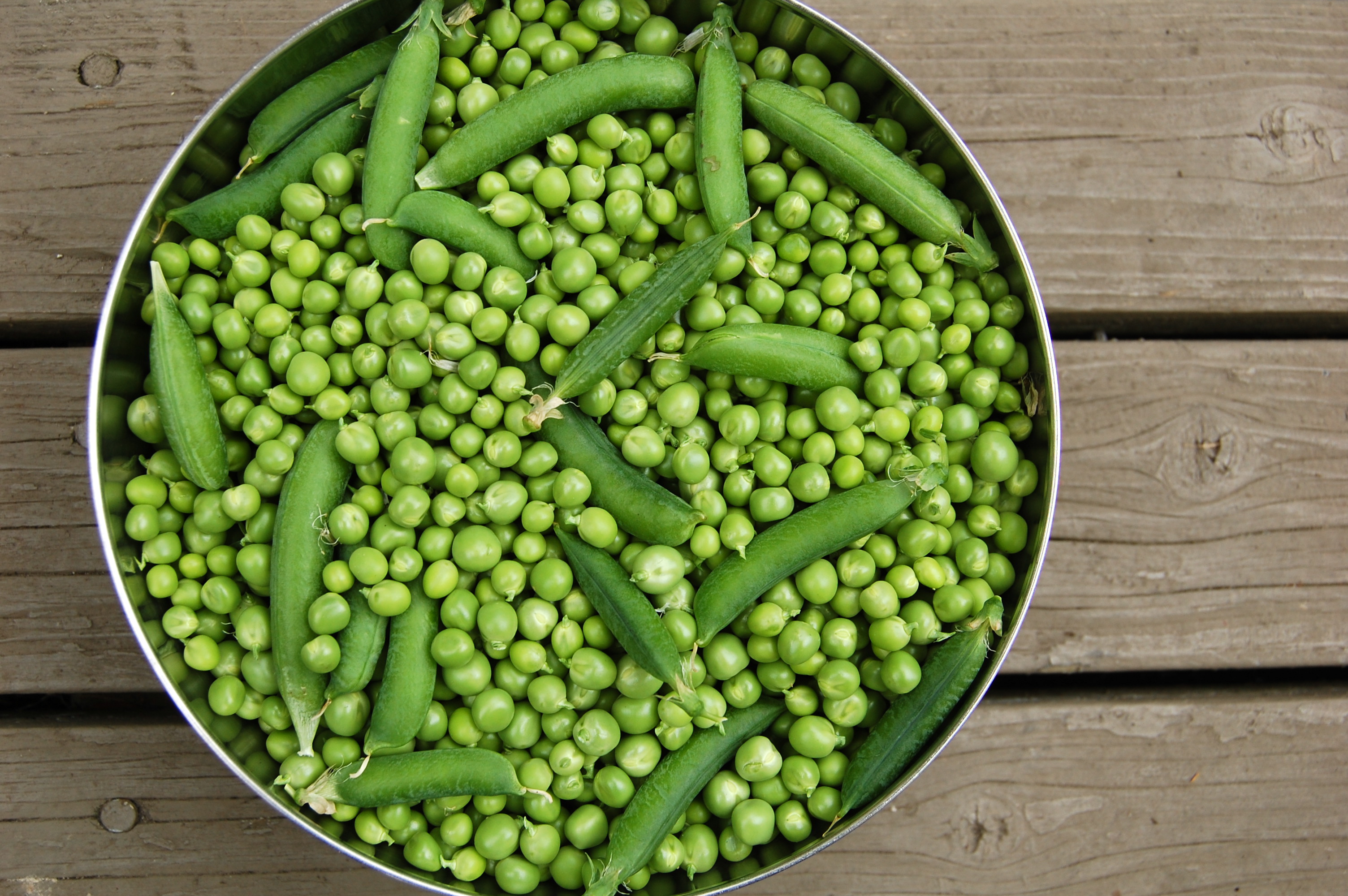
One of the (many) things I love about gardening is how things are just ready when they’re ready. And when that happens, you’ve got to act quick. Me and John received a CSA box for a few years before leaving San Francisco, so we started getting pretty good at designing dinner menus around what was in the fridge that week. Gardening is kind of like that, except you get all of one plant type at once! It was definitely hard keeping up with the mountain of arugula and spinach, but we did manage to eat all of our butter lettuce before the slugs took over. And the radishes and carrots, we destroyed them.
The peas, however, they just keep on coming! Everyday I harvest about 2 cups, shelled, and we just add them to whatever is cooking. I discovered that peas barely blanched and then tossed with butter, tarragon and a little black pepper REALLY rocks my world. Bucatini all’Amatriciana only gets better with a pile of peas thrown in. Chicken Tikka Masala? Add some peas! Last night John cooked dinner and he made a Venetian style risotto dish that I feel should be shared, (even though I suspect the rest of the country is well past pea season) because it showcases English peas beautifully. I suspect this recipe will make it into the pea rotation every spring (or summer if you live in Seattle).
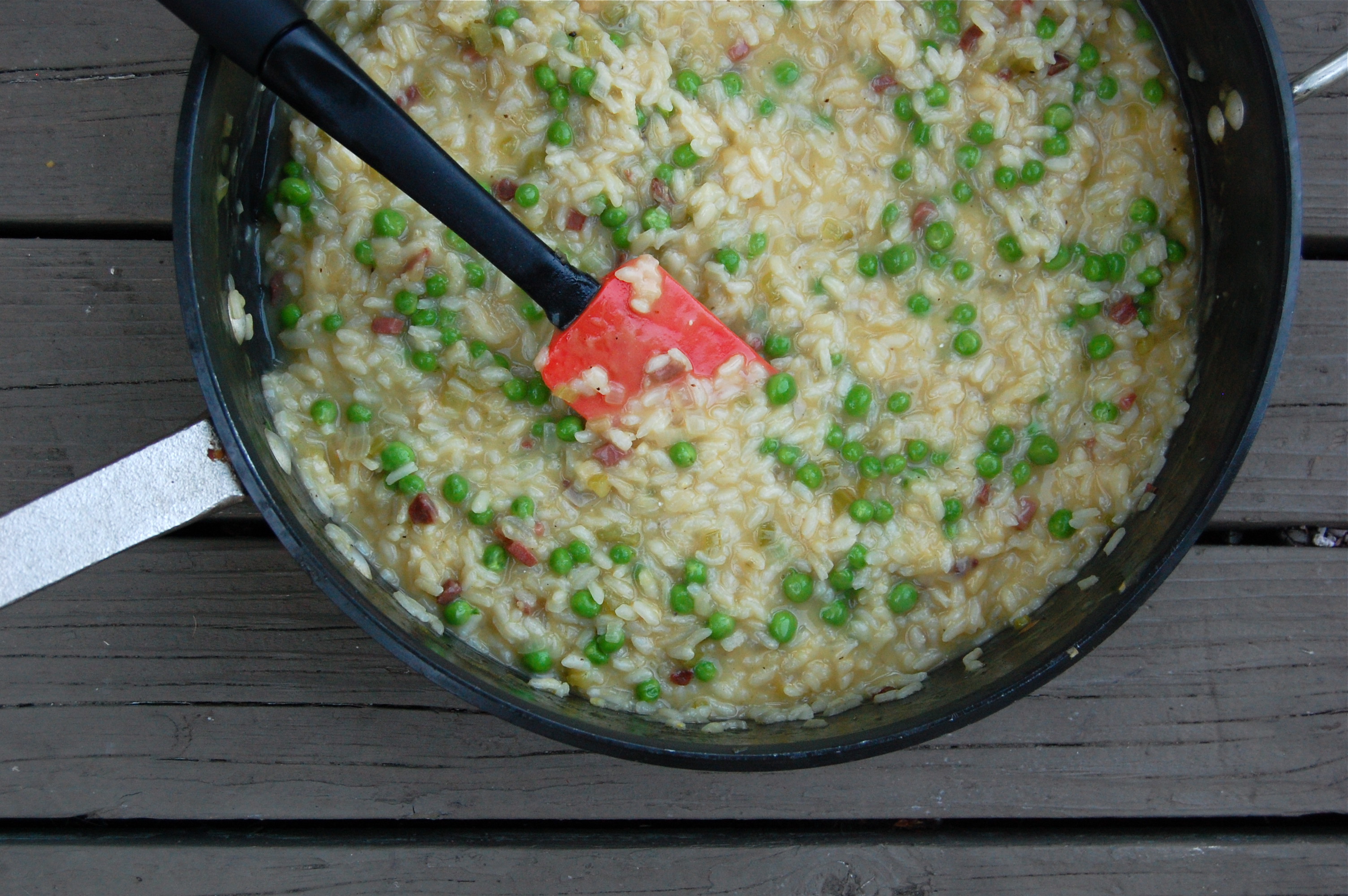
RISI e BISI (Mario Batali):
Serves 4
1/4 cup olive oil
4 small shallots, finely chopped
2 ribs celery, finely chopped
2oz prosciutto, finely diced
1 1/2 cups arborio rice
8 cups chicken stock, hot
1 1/2 cups fresh peas
4 TBSP butter
1/2 cul freshly grated parmigiano-reggiano
salt and pepper
– In a 10-12 inch saute pan, combine the olive oil, shallots, celery and prosciutto and cook over medium heat until the shallots and celery are softened but not browned, 8-10 minutes.
– Add the rice and stir for 2 minutes, until it almost opaque. Add enough stock to just cover the rice, turn the heat up to high, and bring to a boil. Cook, stirring, until the stock begins to be absorbed, then add another ladleful. As the level of the stock dips below the level of the rice, continue to add stock one ladleful at a time, to keep the rice covered, stirring constantly. After 15 minutes, taste the rice, it should still be quite hard.
– Add the peas and continue to cook for about 4 more minutes, adding a little more stock if necessary, until the rice is tender and creamy yet still al dente. The risotto should be quite moist, but not swimming (I actually like it swimming), you may have a little stock left over.
– Remove from the heat, add the butter and cheese, and stir vigorously for 25 seconds. Season with salt and pepper and eat immediately.
The Hottest Buns in Town
Whew. My first 4th of July in Seattle and wow, it was fun. Old friends in town, new friends coming over, lots of food and fireworks and slap scrabble. It was our first party in a Seattle and I’m so glad we did it. But WHEW! There was cooking going on in my tiny kitchen, SO much cooking. Four pies were baked: cherry almond, black raspberry (I didn’t even know such a thing existed until this week!), strawberry rhubarb custard and blueberry lattice. A gigantic cabbage salad with a peanut dressing. More baked beans than I think anyone wants to see in one place. And pulled pork sandwiches. I wanted pulled pork sandwiches badly. Having never made them, I turned to the Lee Bros. for their recipe. Did I mention that we’re talking about 13 lbs. of pork?

It was an intimidating amount of meat. And while the flavor was fantastic (think tomatoes, apple cider vinegar, cane syrup), I have to fault the Lee Bros. for tricking me into thinking that pork shoulder would get as meltingly tender as I wanted in the amount of time they claimed. I now know that pulled pork wants at least 8 hours if you’re on the low-oven-roasting path. It was a close one and I have Sam and Brandon to thank for pulling a delicious dish out of the mess I started, because by the time we realized that the pork needed several more hours of roasting to liquify all that fat, we had already eaten all of the salads, sides and pies in the house. Not to mention the copious amounts of wine I had befriended by then. Thank God for chef friends who are more than competent at drunken cooking!

At some point John made a diagram about when to stop cooking the meat. It was a question of quality vs. time, measuring the increasing quality of the pork as it cooked and our changing expectations relating to our hunger levels. I swear it was genius at the time.

By now you’re maybe thinking “Gee Brandi, your last 3 posts are about meat. What gives?” It’s true, we’ve been awfully carnivorous this month. Which is why I will now turn my attention to the real reason I’m here talking about a pulled pork dish that I can’t even begin to explain how it came to be. My point? The bun. I will admit that when I mentioned to some people that I wanted to make my own buns, there was some skepticism. It was too much work, they said. There are perfectly good buns out there that somebody else made. But I just didn’t buy it. I mean, EVERYONE has a pulled pork recipe up their sleeve (well, except me apparently), but when a girl really wants to take it to the next level, then it’s the bun that gets people’s attention. So I made them anyways. Even though with 4 pies (3 requiring pre-baked crusts), an ungodly amount of beans, and half a day’s worth of pork, we were totally out of oven space.
And you know what people talked about the most at the BBQ? Those sexy little buns of mine.
There were lots of them, rising all over the house.

They were glazed with egg and sprinkled with seeds.

And then baked until they were puffed and golden.

I don’t care how much effort they were (not THAT much really), I’m never buying a bun from the store again.

And just so no one thinks I’ve stopped caring about dessert, here’s a blueberry lattice pie that was devoured in about 15 minutes flat.

LIGHT BRIOCHE BUNS RECIPE (adapted from Comme Ça restaurant, printed in the New York Times):
3 TBSP warm milk
2 tsp active dry yeast
2 1/2 TBSP sugar
2 large eggs
3 cups bread flour
1/3 cup all-purpose flour
1 1/2 tsp salt
2 1/2 TBSP unsalted butter, softened
Sesame or poppy seeds (optional)
1. In a glass measuring cup, combine one cup warm water, the milk, yeast and sugar. Let stand until foamy, about five minutes. Meanwhile, beat one egg.
2. In a large bowl, whisk flours with salt. Add butter and rub into flour between your fingers, making crumbs. Using a large spoon, stir in yeast mixture and beaten egg until a dough forms. Knead until smooth and elastic, about 8 to 10 minutes. You can either transfer the dough to a clean surface for this or knead it right in the bowl. It’s a touch sticky, but resist the urge to add more flour.
3. Shape dough into a ball and return it to bowl. Cover bowl with plastic wrap and let rise in the fridge. This long proofing time will make a nicer flavor and also make it easier to shape while cold.
4. Line a baking sheet with parchment paper. Divide the dough into 8 equal parts. Gently roll each into a ball and arrange two to three inches apart on baking sheet. Cover loosely with a piece of plastic wrap lightly coated in nonstick spray and let buns rise in a warm place for one to two hours, until they almost double in size.
5. Set a large shallow pan of water on oven floor. Preheat oven to 400 degrees with rack in center. Beat remaining egg with one tablespoon water and brush some on top of buns. If desired, sprinkle with seeds. Bake, turning sheet halfway through baking, until tops are golden brown, about 17-18 minutes. Transfer to a rack to cool completely.
A Duck!
We all have our lists of things to be done in life, mine just happens to involve a lot of food. I’ve been wanting to confit my own duck legs since I first tasted it in Scotland (I know, unlikely location) 10 years ago. I knew it was relatively easy, I had several recipes and I had watched other chefs do it at work. I just never seemed to remember to get some duck meat for myself. While at the farmer’s market a few weekends ago I saw a sign advertising ducks for sale and well, all signs pointed to me hunting for copious amounts of duck fat. Luckily a chef friend who regularly confits keeps the fat around and offered it on loan. And now I had no excuses. So I began the meaty journey that is duck confit.
First step: Seasoning the duck and letting it soak up the flavor for a day or two.
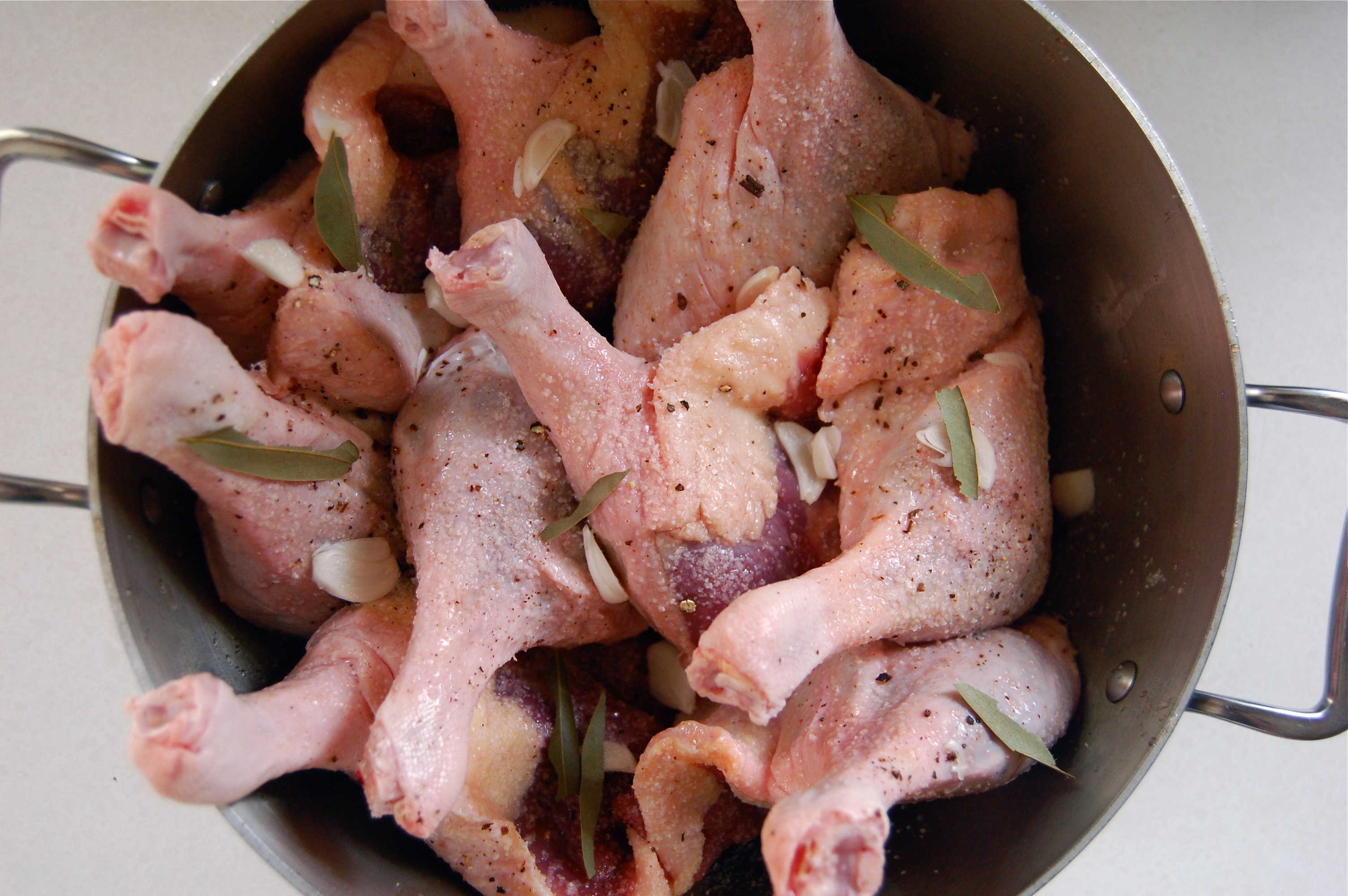
Then the fun begins. I rinsed off the seasonings and placed the legs in a container large enough to fit them comfortably. Then I covered them in that glorious duck fat. I brought them to a simmer on the stove and then popped them in the oven to poach for 6 hours. Let me just say that there are few things better than spending the day bathing in the smell of duck. I was worried at first that after a few hours I would be turned off, but no, it only made me want to tear into that meat more.

Once the ducks were cooked (they fall to the bottom of the dish when done), I took them from the oven and let them cool to room temperature. Some of them I was using for dinner that night while the rest were going to be stored in the fridge for future use.
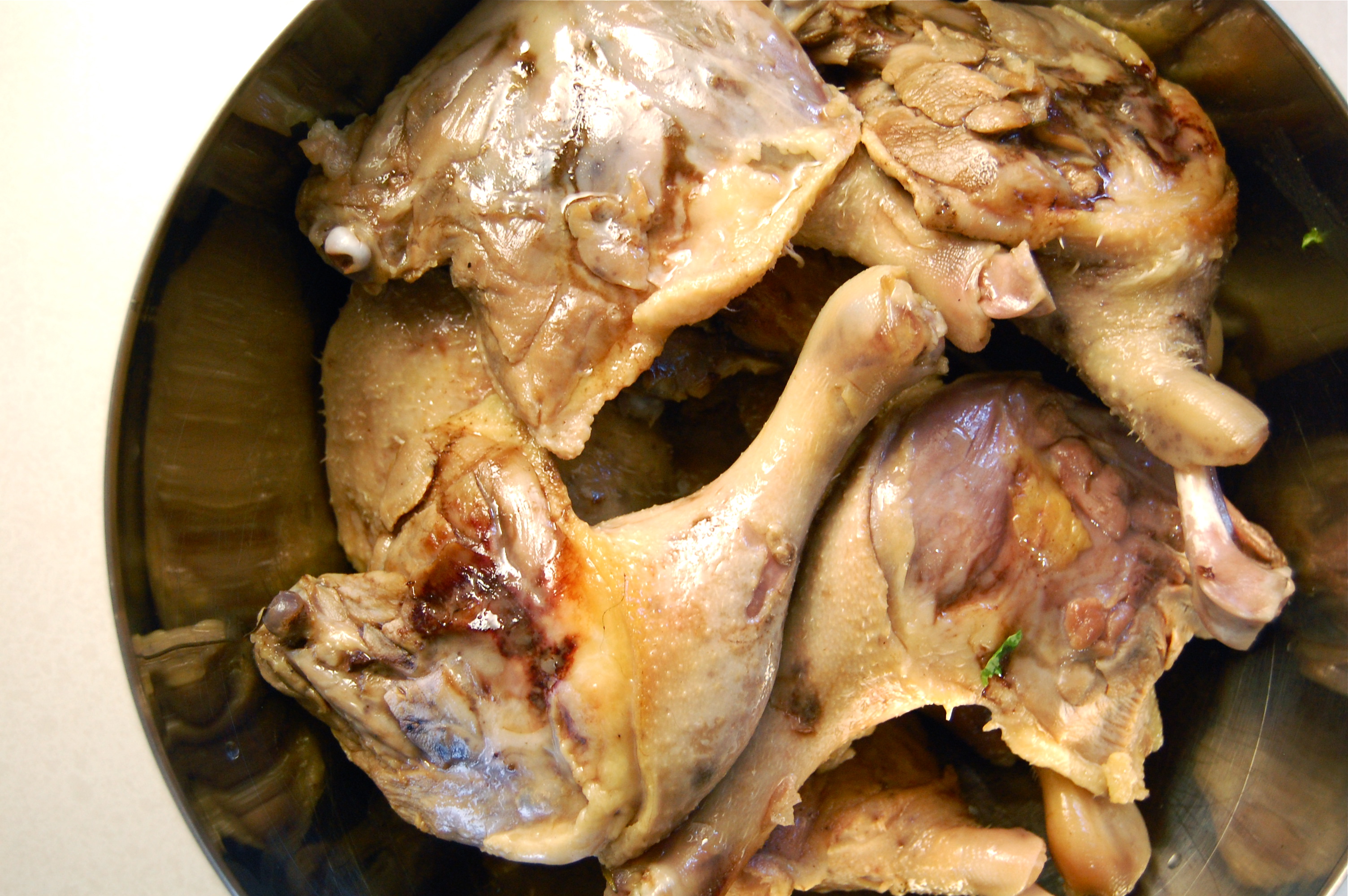
And they were magnificent. I braised them with lentils and bacon for friends and there wasn’t a drop left. I think I’m gonna be making this quite often.
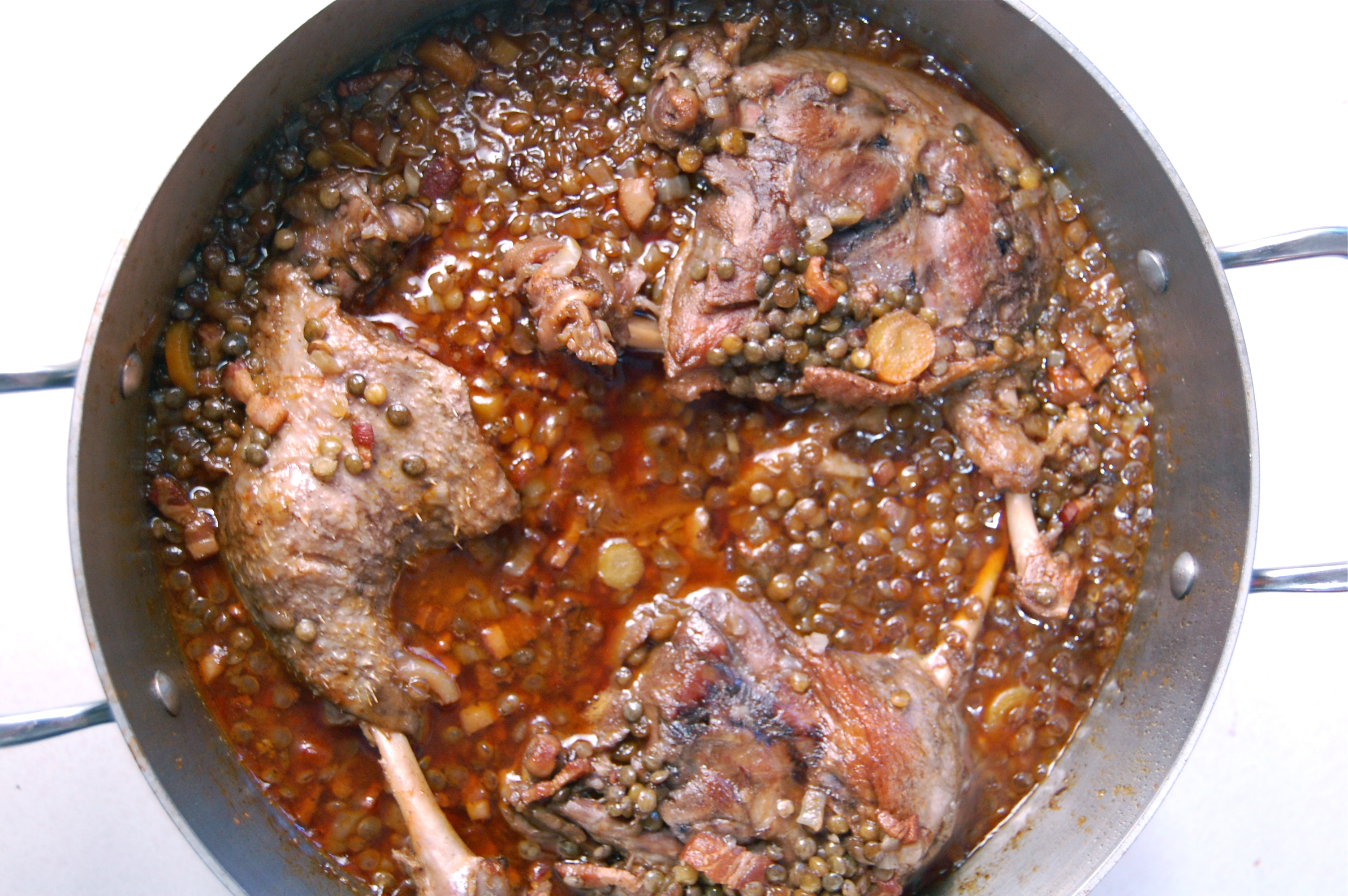
DUCK CONFIT RECIPE (Michael Ruhlman):
6 duck legs
3 TBSP salt
4 whole cloves
8 black peppercorns
3 garlic cloves, sliced
3 bay leaves, halved
8 cups duck fat, enough to cover duck legs before cooking
– Sprinkle ducks with salt and place in a dutch oven or deep pan. Using a mortar and pestle, crush the peppercorns and clove and scatter over the duck along with the sliced garlic. Press a halved bay leaf onto each duck leg. Cover with plastic wrap and refrigerate for 24-48 hours.
– Rinse duck under cold water to wipe off seasonings. Pat dry and place back in dutch oven.
– Preheat oven to 180°F. Pour duck fat into dish, completely covering duck. Bring to a simmer over medium high heat. Place, uncovered, in the oven and cook for 6 hours, until the duck is tender and has settled on the bottom of the pan.
– Remove from the oven and cool completely. Gently transfer duck legs to a dish for storage. Cover the duck with the fat until completely submerged. Seal with lid or plastic wrap and refrigerate overnight or up to one month.
– When ready to serve, remove duck legs from the fat (this will be much easier if you first warm up the fat). Place skin-side down on hot skillet and let skin crisp on medium heat until golden brown. Turn duck over to brown bottom and to warm meat through, about 5 to 7 minutes. Serve crisped duck confit immediately.
BRAISED DUCK WITH LENTILS
8oz bacon, chopped
6 duck confit legs
1 onion, diced
1 large carrot, diced
4 garlic cloves, minced
2 cups red wine
6 cups chicken stock
1 1/2 cups french green lentils
1 TBSP tomato paste
4 sprigs thyme
salt and pepper to taste
– Cook bacon over medium heat in a large dutch oven. Remove from pot and place on paper towel. Remove all but 2 TBSP of the bacon fat.
– Sear the duck legs until the skin crisps and browns. Remove from pot and set aside.
– Cook onions and carrots in the bacon fat (add more if necessary) over medium heat until starting to become clear. Add garlic and cook on minute longer. Add the red wine and simmer over medium high heat until reduced by half.
– Add the stock, lentils, tomato paste and thyme and cook over medium heat for about 15 minutes. Stir in the cooked bacon and nestle in the seared duck legs. Cover and cook over low heat for about 1 1/2 hours. The meat should be very tender. You could also cover it and bake it in a 325 degree oven for the same amount of time.
Going Winter for Summer Solstice
So this week I started to crack. After weeks months of me sticking up for Seattle, begging for patience, CONVINCED that summer is just around the corner and that when it arrives everything in life will work itself out like a freshly fluffed pillow. Remember when I wrote about spring vegetables and how I was gonna cheat and buy Californian because I was just so impatient and well, Washington peas would be just a few more weeks, right? And telling my family “No, wait to fly out to visit for summer, when the weather is fantastic.” Well, today was summer solstice and it seriously felt like winter. We JUST got local peas. And I’m still waiting on a reliable source of tiny sweet strawberries so I can take the rhubarb dessert off the menu. I kept telling myself “it will warm up in time for solstice, we’ll totally be able to eat on the porch.” There was no porch-eating. There were however, some peas. So we decided to just go with it. If Seattle wants it to be winter, then dammit we’re cooking winter food.
So we roasted.

A pretty little beef roast seasoned with garlic and herbs.

Sliced into yummy little medium rare pieces.

And there was gravy. And buttery mashed potatoes. And freakishly delicious fresh peas just barely boiled and tossed with butter and tarragon.

But most importantly, there were Yorkshire puddings. Somehow, like the much-later-than-it-should-be summer, I was the last person on Earth to know about Yorkshire puddings. I mean, I had heard of them, I just didn’t take them seriously. We didn’t grow up eating them, and from the photos I had seen, they just looked like dinner rolls. And what is up with the British calling everything a pudding?
Let me start at the beginning. There was a batter, a very simple batter of flour, salt, pepper, eggs and milk. It needed to rest, so I made it an hour before I was ready to use it.

After the roast beef was finished serving time in the oven I cranked up the heat and spooned drippings into a muffin tin.
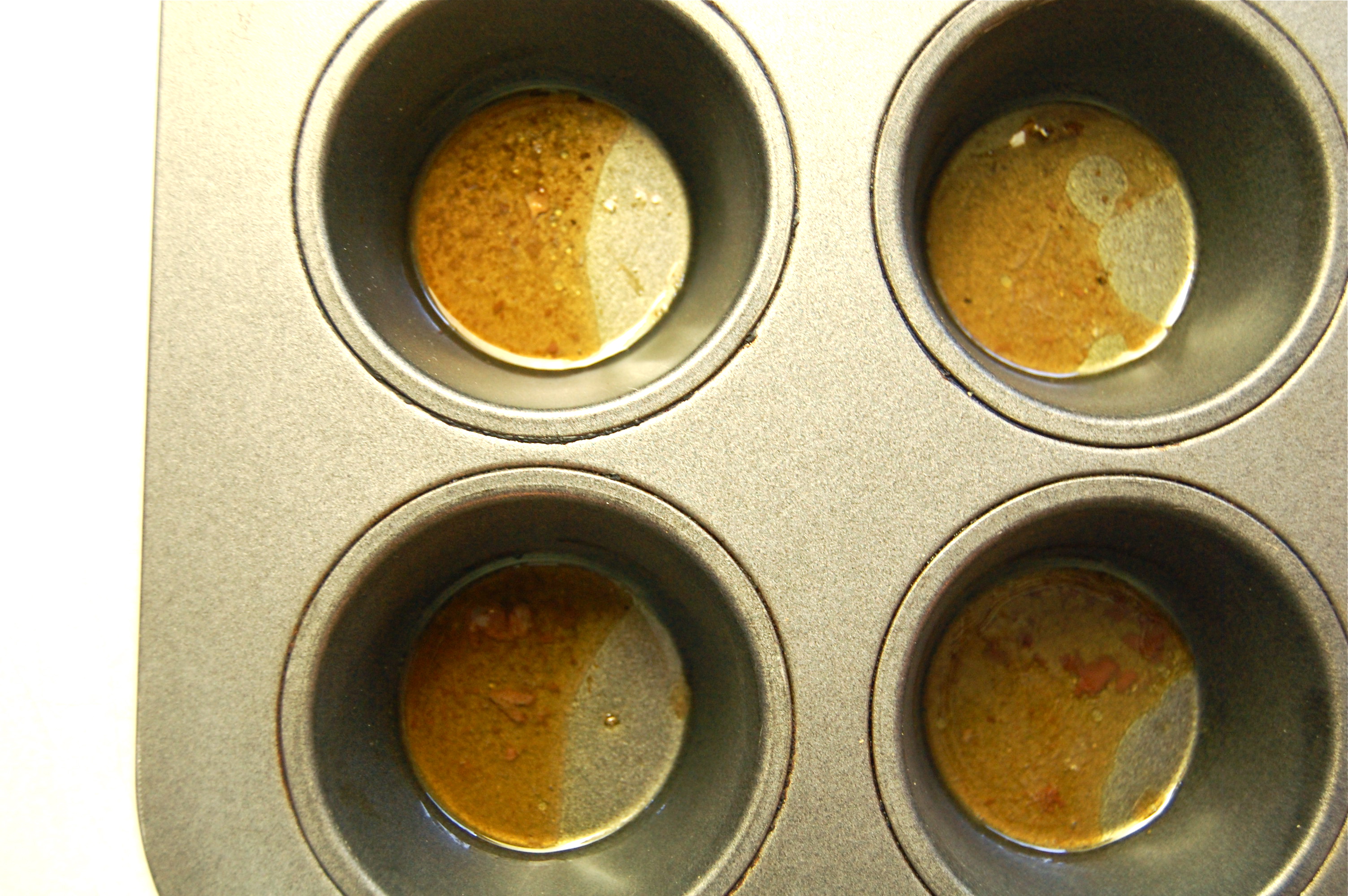
I popped the fat slicked pan into the hot oven and let it sit until the drippings were boiling and crackling. I filled up the little cups 1/3 of the way with the batter and back into the oven it all went.
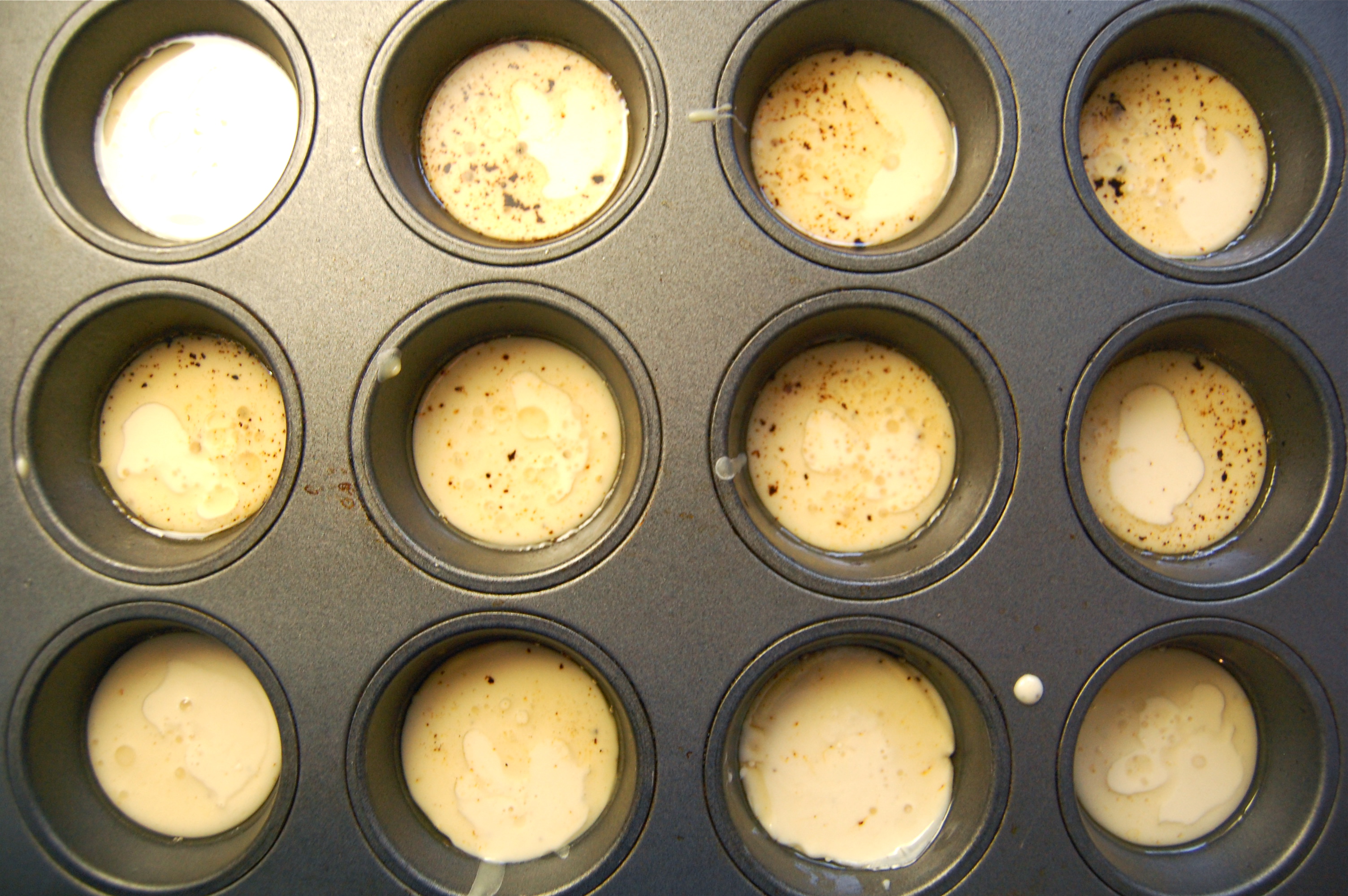
25 minutes later and I was head over heels in love with these little guys. How to even begin to describe them? They souffléd up so tall and proud. Yet, for all that muscle they were as soft as pillows (second pillow reference of the night, I must be sleepy…). They were SAVORY! The flavor of the beef fat was all there, and with some gravy spooned over them, oh. my. god. I ate three. Do yourself a favor and make these. I suspect I will be eating them quite regularly. I’ve been looking for a way to use up my left-over bacon fat!

YORKSHIRE PUDDINGS RECIPE (adapted from Martha Stewart):
2 cups all purpose flour
1 tsp salt
Freshly ground pepper
4 large eggs
3 cups whole milk
6 to 8 tablespoons drippings from roasting pan or pork fat
– In a large bowl, combine flour, salt, and pepper. Make a well in the center, and add eggs and 1/4 cup of the milk. Using a whisk, combine eggs and milk, then incorporate flour; begin with the inner rim of the well. Continue whisking until a smooth, stiff batter forms.
– Stir in half of the remaining milk. Cover with plastic wrap and let stand at room temperature for 1 hour.
– Heat oven to 450 degrees. Transfer 1 to 2 teaspoons of drippings into each cup of a muffin tin. Put the pan in the hot oven until it starts to bubble.
– Stir enough of the remaining milk into the batter until it is the consistency of heavy cream. Pour batter in the muffin tins, filling them about one-third full; the batter should sizzle in the hot drippings.
– Return to oven and bake until puffed, browned, and crisp, 25 to 30 minutes. Yorkshire pudding is best served fresh from the oven, but it can be kept warm in a low oven for about 15 minutes.
The First Fruit Pie of Summer
And so it begins. I know, we’re a bit late, but fruit has finally arrived in the Pacific Northwest. Every year I await with relish the first bloodbath of cherry pitting. Somehow I always forget just how messy it gets and stain everyone and everything within arm’s length of the kitchen. But having my kitchen look like a killing floor is a small price to pay when you’re fruit-starved in June. A visit to the Ballard farmer’s market left me carrying 3 lbs of local cherries (along with some of the teeny-tiniest sweetest little strawberries!) and I was determined to make pie. Because, well, it has just been too long.

As with any pie, I started with my dough. I wanted to make a lattice top, so I decided to use the smear technique (more detailed instruction here) for my pâte brisée dough. This dough gives plenty of flake without all the puffing up of a laminated dough.

I was pleasantly surprised at how quick pie-making has become for me. I have faint memories of spending all day on one pie and feeling it was too prized to eat. Now I can dig in knowing that if I run out, I can just make another!

Since cherry and almond are like peanut butter and jelly (and Pantea’s favorite, this pie is for you!) I whipped up some frangipane to spread on the bottom crust.

Then I loaded her up with cherries.

And got to work on some strips for the top.
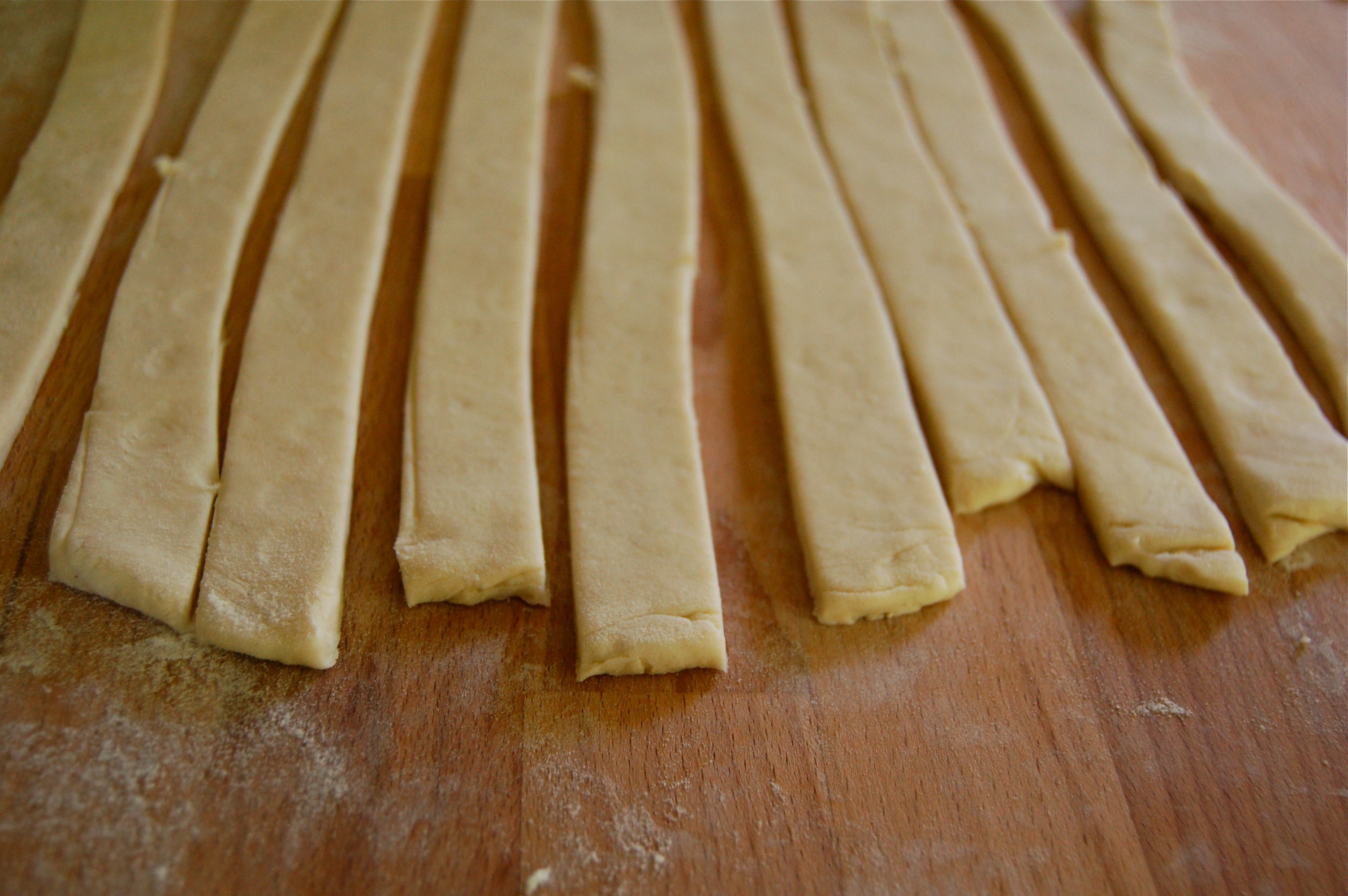
It was my first time making a lattice top and now I can’t imagine what took me so long to try. So much pretty for such little effort!
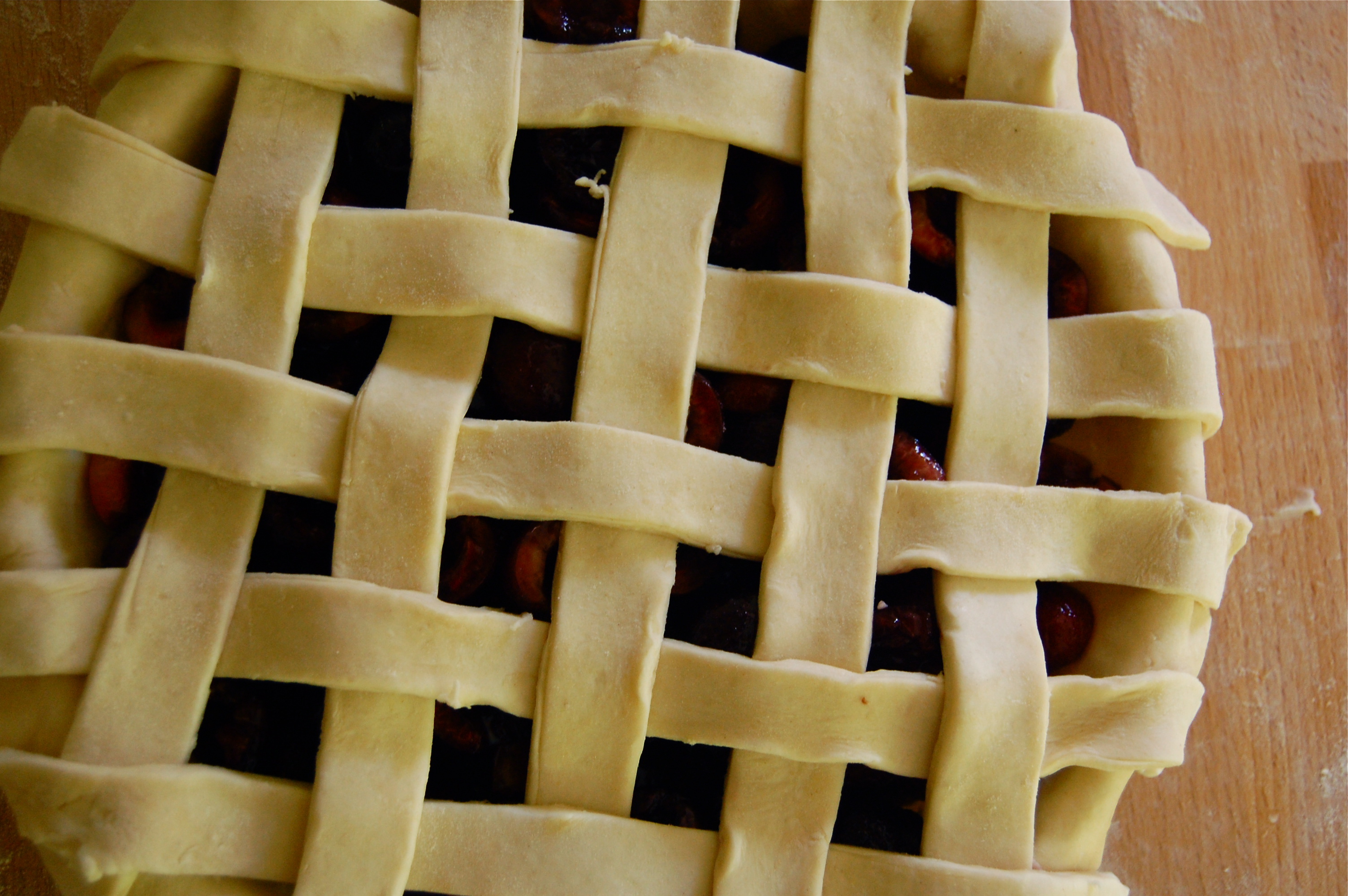
I want so badly to have a beautiful picture of a perfectly baked cherry pie. Unfortunately we tore into this pie so fast I forgot to document! It was a lovely first pie: flaky crust, yummy almond undertones. My only complaint would be that the cherries were just not quite there. Hopefully they’ll sweeten up in the next few weeks. Rumor has it that all the fruit west of the Cascades is waterlogged this year, so it’s going to be a hunt for the good stuff. If anyone can recommend great cherry farms, please share! In the meantime, I’ll be gorging on those teeny tiny strawberries.

You can take the girl out of Bama…
But you can’t take the boiled peanuts away from the girl! Every time I go back to Montgomery to visit the friends and family, I have a few stops that need to be made. I need to buy a book at Capitol City Books in Old Cloverdale, buy a copy of Garden and Gun magazine at whatever southern airport I land in, eat a Chick-fil-a chicken biscuit sandwich. But the most important stop is to buy a bag of boiled peanuts from the guy selling them on Old Selma Road. It’s usually my first stop since he lives down the street from my grandmother. Every time I tear through a bag I remind myself to make some when I get home. The problem is that boiled peanuts are traditionally made with green peanuts, and I have no idea how to get my little paws on those. So while visiting Bama and purchasing my bag of gold last week, I asked the guy that makes him where he gets his. He informed me that he just uses the dehydrated ones you can find anywhere, since the green ones can mold so easily. So there. There was nothing stopping me. So I made some.

To be honest, I’m not totally sure the appeal of boiled peanuts transcends nostalgia. So far most every non-southerner I’ve forced them on has reacted either indifferent or confused as to why I like them. Supposedly they’re hip in Brooklyn right now, so maybe that means their popularity will make it to the West coast sometime next year. But I don’t have to wait, because now I can just do it myself!
And it is SO easy. All you need is time. And some peanuts of course. There’s no real magic to these guys, you just load your peanuts into a pot of salty water and boil away. The hardest part is waiting for them to cool before dipping your hand in for a bite.

RECIPE:
1 lb peanuts (unshelled)
5 TBSP salt
– Rinse the peanuts to remove any dirt.
– Place in a large pot and cover with enough water to cover by an inch (you’ll need to press the nuts down to measure because they like to float). Add the salt. Cover and bring to a boil.
– Once boiling lower to a medium simmer and keep going for about four hours. You’ll want to check in every now and then to see if more water needs to be added. After four hours, taste one. The shell should be soft and pliable and the nut should taste strongly of the salty brine. If not, keep going until it does.
– Once finished boiling, turn off the heat and let the nuts sit in the brine at room temperature for a couple hours. Dig in and store whatever is left in the brine in the fridge. I’m not sure how long they COULD last, but if you’re from Alabama I doubt that will be an issue.
Rhubarb. My new favorite.
I just can’t hold this one back anymore. I decided months ago that I wanted to make rhubarb shortcakes for Delancey’s dessert menu. I had a decent recipe for rhubarb compote from my old job, but I knew I could make it better. Me and Molly compared our favorite compote recipes and came up with an ingredients list that was pretty killer. Think vanilla bean. Sugar. Orange liquor. Butter. You toss all these things together and let them sit and get all juicy.
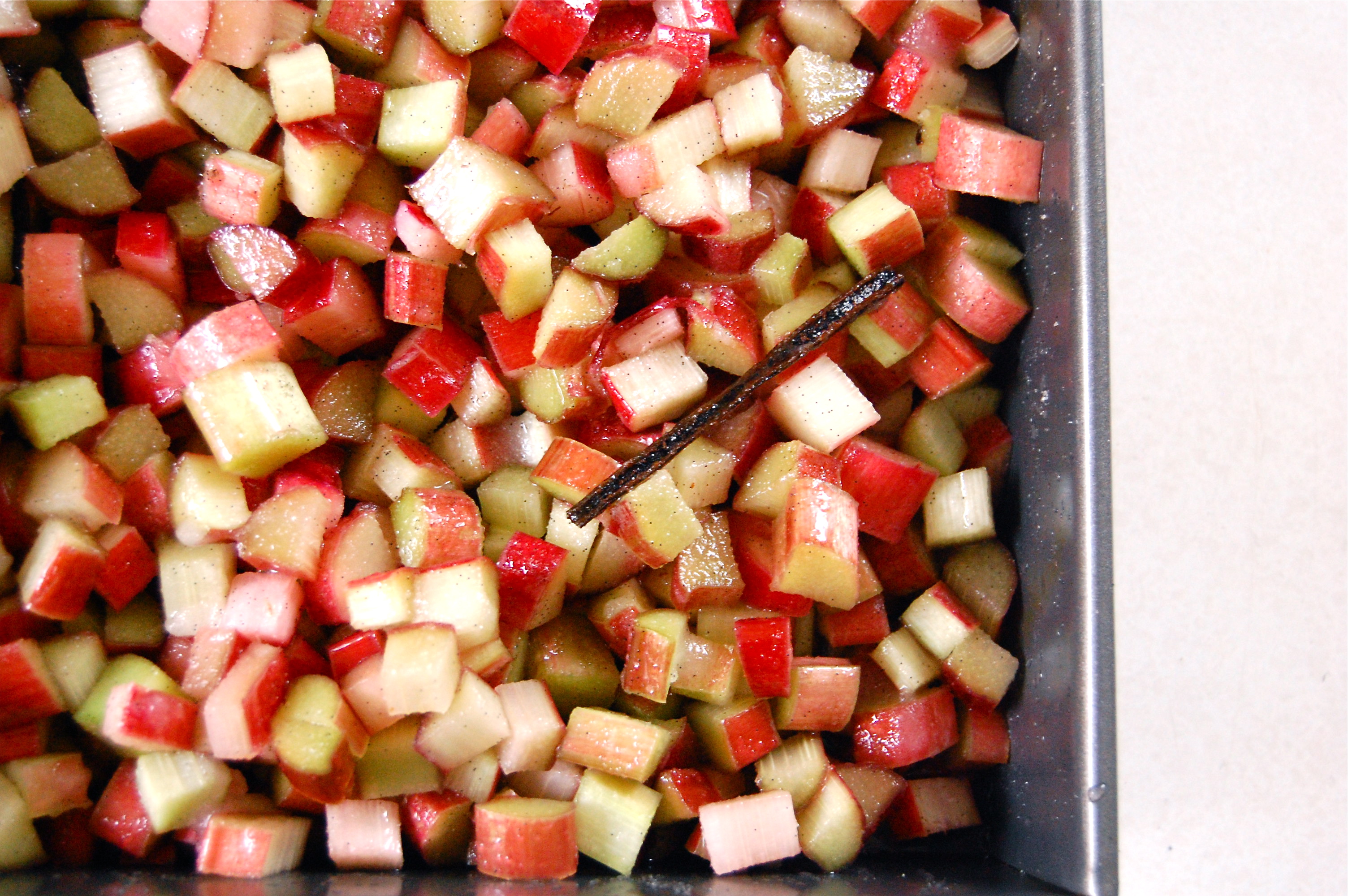
Then you roast them until they soft and bright.

And this is where the magic happens. Strain out the liquid from the rhubarb and set the chunks aside. Then reduce that liquid into a nice syrup. This concentrates the flavor to the point of extreme rhubarb deliciousness. As my friend Meredith at Delancey said “It’s more rhubarb-y than rhubarb.” And that my friends, is what I’m talking about.

We serve it with flakey shortcakes and mascarpone cream.

At home I eat it with buttermilk souffle cakes. The world is your base to put rhubarb on.
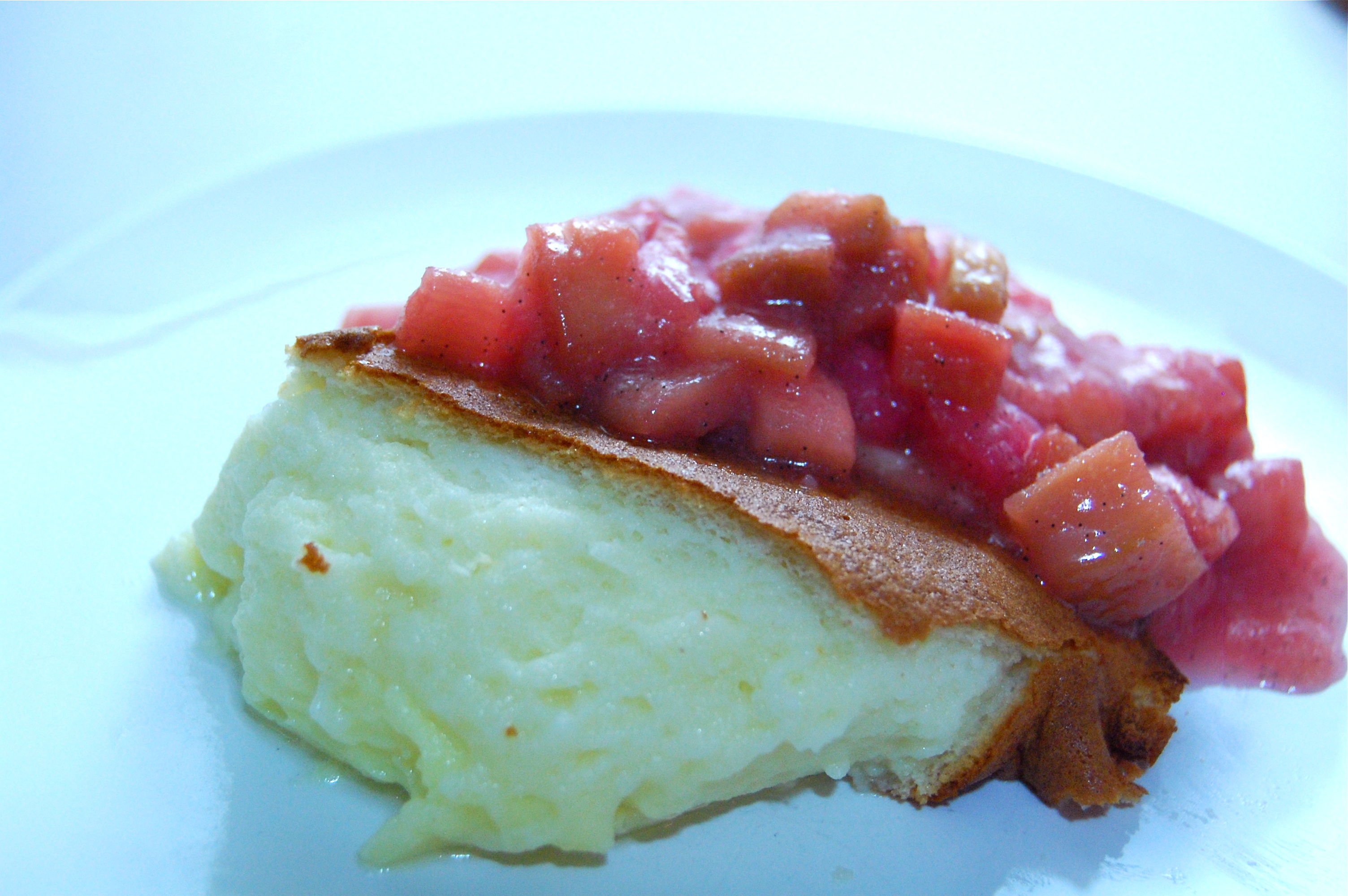
RHUBARB COMPOTE:
4 lb rhubarb, diced
2 cups sugar
1 vanilla bean
½ cup grand marnier
4oz butter
– Slice open the vanilla bean and scrape the seeds into the sugar to break up clumps.
– Combine all ingredients, including vanilla bean pod, in a baking pan. Stir well and let sit for 30 minutes.
– Divide into 2 batches and cover pans with aluminum foil. Bake at 325 for 30-40 minutes. You want to cook it long enough for the fruit to still hold it’s shape, but to start to break up as you stir it. At this point remove one pan from the oven and set aside to cool.
– Continue cooking the other pan for 10-15 more minutes, until the fruit turns a brighter shade of red and breaks down more easily. Remove the 2nd pan from the oven and set aside to cool.
– Strain out liquid from both pans into a saucepan. Place rhubarb chunks into a large bowl and set aside.
– Boil rhubarb juice over high heat until it is reduced to a syrup. Be careful not to burn.
– Mix syrup back into rhubarb chunks.
– Is best eaten at room temperature, but store in fridge.
well, it’s about time.
I know, there’s no excuse. The sad thing is that I actually have a stack (if digital files could stack) of photos from my meals this past month. I just haven’t found the motivation to park myself in front of the computer and look at them. Or write about them. There’s been delicious pasta, a rhubarb compote that feels like there’s a rhubarb party in your mouth, an all roasted Easter dinner. I’ve even been maniacally documenting my garden, to explain my away time. But none has made it to the interweb. Until now anyways. My friend Justin was in town from Ecuador for his birthday. Recently he asked if I would someday make him a key lime pie, so me and his girlfriend Meredith decided a surprise pie was in order. Since I like to make my life more complicated whenever possible, I opted for a pie vs. cake challenge. Forever the defender of birthday cakes, I decided this was my chance to convince the world of cake’s subtle awesomeness. Unfortunately my key lime coconut cake kinda blew (shocking, I know!), so I’m only going to share with you the pie. And what a pie it was. Key lime pie with coconut graham crust and a coconut whipped cream on top. Makes me miss living farther south where the key limes are actually green.

As with anything citrus related, there was a lot of squeezing.

Now as far as desserts go, the key lime pie is definitely in the easy category. So easy I even considered not sharing with you. And graham cracker crusts? I admit that I tend to snub my nose at them. But I had this vision of chunky coconut and graham goodness cradling that creamy tartness and I just had to go with it. Let me tell you, this pie, well, it won me over. Big time. There were people at the birthday party thanking me for letting them taste this. LETTING THEM! Ha! So. The crust. it involved toasting some shredded coconut.

And mixing that coconut in with brown sugar, melted butter and ground up graham crackers (I know, I should have made my own).
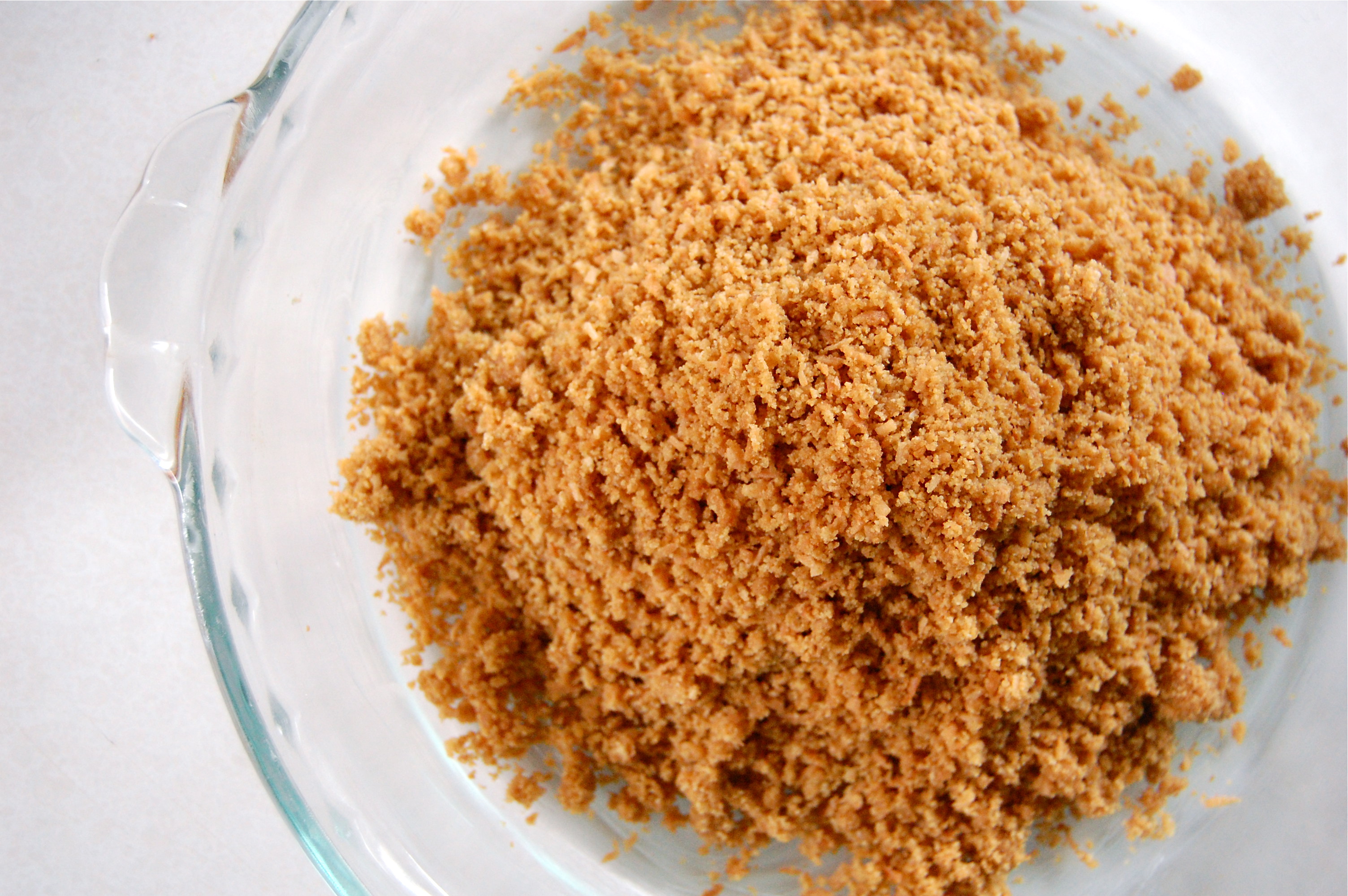
I pressed that into the pie plate and let it chill in the fridge before baking it.

Then I whipped up the classic key lime filling: egg yolks, sweetened condensed milk and key lime juice. I poured that into the cooled pie crust and baked in on low until it set up.

After the pie chilled for an hour or so, I whipped up some cream that I had earlier steeped with coconut flakes. I spread the coconut cream on top and sprinkled on some toasted coconut flakes. And it was promptly devoured at the party.

KEY LIME PIE RECIPE:
COCONUT GRAHAM CRUST:
1 cup shredded unsweetened coconut
2 cups graham cracker crumbs
3 TBSP light brown sugar
5oz unsalted butter, melted
pinch of salt
– Toast the coconut until lightly browned.
– Cool and add to the rest of the ingredients in a large bowl. Mix well, until everything is moist.
– Press into a buttered pie pan and chill for 15 minutes.
– Bake in a 325 degree oven for 10 minutes.
– Cool completely.
FILLING:
2 14oz cans sweetened condensed milk
6 large egg yolks
1 cup of freshly squeezed key lime juice
– In the bowl of a kitchenaid mixer, with the whip the egg yolks until pale and fluffy, about 3 minutes. Gradually add the condensed milk and beat until light and fluffy, 3 more minutes.
– Scrape down the sides of the bowl and beat in the lime juice.
– Pour the filling into the crust and bake for about 10 minutes, or until the filling is set. Remove from oven and place on a wire rack to cool.
– Once cooled, place in the fridge until serving time. Just before serving whip the coconut cream.
COCONUT CREAM (Claudia Fleming):
3 cups heavy cream
6 TBSP sugar
1 1/2 cups shredded unsweetened coconut
– Place cream and sugar in pot and bring just to boil.
– Pour in coconut and cover. Let steep for 1 hour.
– Strain out coconut and refrigerate for at least 4 hours.
– Whip until thickened.
My “It is so Totally Spring” Gnocchi
Finally! Finally I have time to cook a nice meal for myself! To be honest, I had to make myself do it. Why? Because as far as I am concerned it is Spring. And every year, I love to welcome my absolutely favorite cooking season with a delicious dinner. It’s usually Italian and ALWAYS includes fresh English peas and asparagus. I know technically asparagus and peas aren’t growing in Washington quite yet, but I just spent the week in San Francisco and decided that as a transplant I’m allowed to import the good stuff from California. You know, for special occasions. Around my house we’re still perfecting the gnocchi, so I decided to make a Springy lemon gnocchi with a lemony cream sauce. Can you say happy? And did I mention we had friends coming over? FRIENDS! New Seattle friends!

First step – boil the potatoes until they’re nice and smooshy.

After they boiled, I drained the water out and placed them back in the pot. Then I continued to cook them over medium high heat to get as much of the water left in them to evaporate. That step keeps you from having to add too much flour into the dough later. Once they were dried out a bit (and getting dangerously close to burning), I pushed them through a ricer. Don’t they just look adorable as spaghetti?

I sprinkled on some flour and started kneading until all of the potato was coated. Then I added some egg yolks, lemon zest, salt and olive oil. I kneaded everything together, adding more flour until the dough was smooth and not too sticky. You can never get all the stick out, but I prefer to just roll the finished gnocchi in flour than add too much into the dough.

I rolled long tubes of dough and then sliced them into little pillows. I popped the little guys into the fridge to chill while I worked on the sauce.

And by sauce, I mean cream sauce. A yummy cream reduced with peas, asparagus, garlic and chili flakes. Once it was a nice thickness I stirred in lemon juice, zest and parmesan.

In the meantime we boiled up the gnocchi (which thankfully only needs to cook for 1-2 minutes).

I tossed the gnocchi into the lemon cream sauce and sprinkled on some bacon. Of course there was bacon! Pancetta would have been nice as well, but I just ordered 3 lbs of bacon form Zoe’s and was itching to put it to good use.
The whole dish was super yummy. Not too rich, not too lemony, just right and totally Springy.

Lemon Gnocchi with Asparagus and Peas
serves 4-5
Lemon Gnocchi:
1 lb 4oz baking potatoes, peeled and cut into 2-inch chunks
4 large egg yolks
Zest of 2 lemons
2 tsp olive oil
2 tsp salt
1 cup all-purpose flour, plus more as needed
– In a medium saucepan, cover the potatoes and bring to a boil. Simmer over moderately high heat until the potatoes are tender, about 15 minutes. Drain the potatoes, then return them to the pan. Shake over moderately high heat until dry.
– Working over a large rimmed baking sheet, rice the hot potatoes in an even layer. In a small bowl, whisk the egg yolks with the lemon zest, olive oil and the salt and pour over the potatoes. Sprinkle the flour over the potatoes and stir gently just until a dough forms.
– Gently roll the dough into four 1/2-inch-thick ropes. Using a sharp knife, cut each rope into 1/2-inch pieces. Toss in flour if sticky. Transfer the gnocchi to a baking sheet, cover with plastic wrap and refrigerate.
Lemon Cream Sauce:
5 slices bacon, chopped
1 1/2 cup fresh english peas
1 cup heavy cream
1/2 tsp dried hot red-pepper flakes
1-2 garlic cloves, minced
1 lb asparagus, sliced diagonally
2 tsp grated lemon zest
1 TBSP fresh lemon juice
1/2 cup shredded parmesan
– In a skillet , cook bacon over low heat until fat renders out. Drain out the fat and reserve 1 TBSP for sauce.
– Bring cream to a simmer in a small saucepan. Add asparagus, peas, red-pepper flakes, garlic, reserved bacon fat and 1/4 teaspoon salt. Simmer, until peas are tender and sauce has thickened, about 5 minutes.
– Remove from heat and stir in lemon zest, juice and parmesan.
– Meanwhile, cook gnocchi in a pot of boiling salted water until the gnocchi floats. Drain gnocchi.
– Add gnocchi to the sauce and stir to coat.
– Plate and sprinkle with bacon.
The upside-down pineapple cake that (my) dreams are made of
A confession: I’m not into tropical fruits. Well, bananas excluded. All others I feel pretty lukewarm about. And pineapples? Yuck. Not a pineapple fan. But then something happened. My friend Josh made this cake for me at my goodbye San Francisco party. It was pure heaven. And now I’m hooked on pineapple upside down cake.
It was my first time even purchasing a pineapple. And photographing it? How do you photograph something so odd looking? I settled on an outside shot, because it just looked weird in my kitchen.
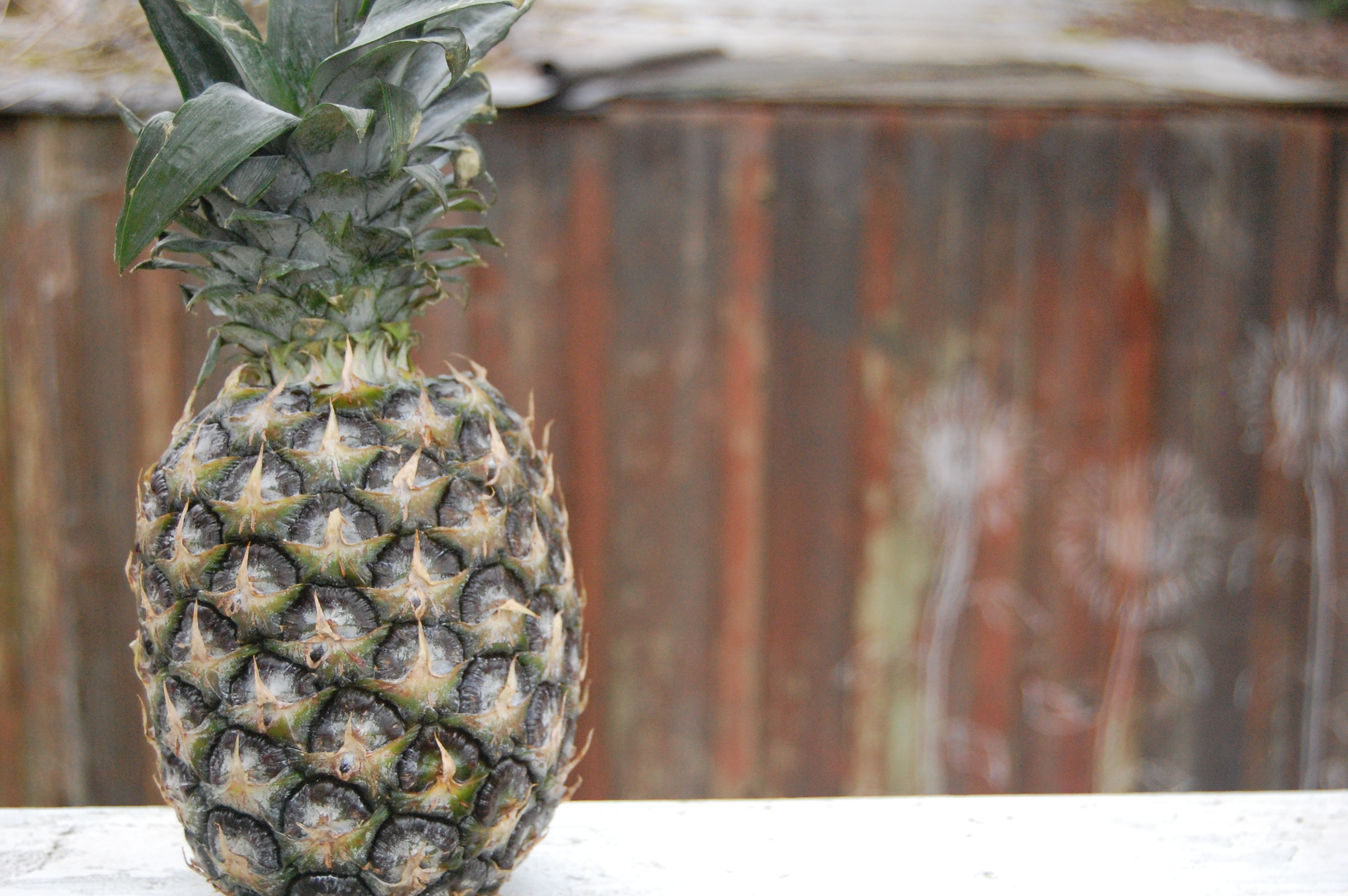
So anyways, the cake.
I started by making a salty, sweet, dark butterscotch sauce. Once ready, I poured the sauce into a 10″ cake pan.

And then I begin the task of dissecting this alien fruit.
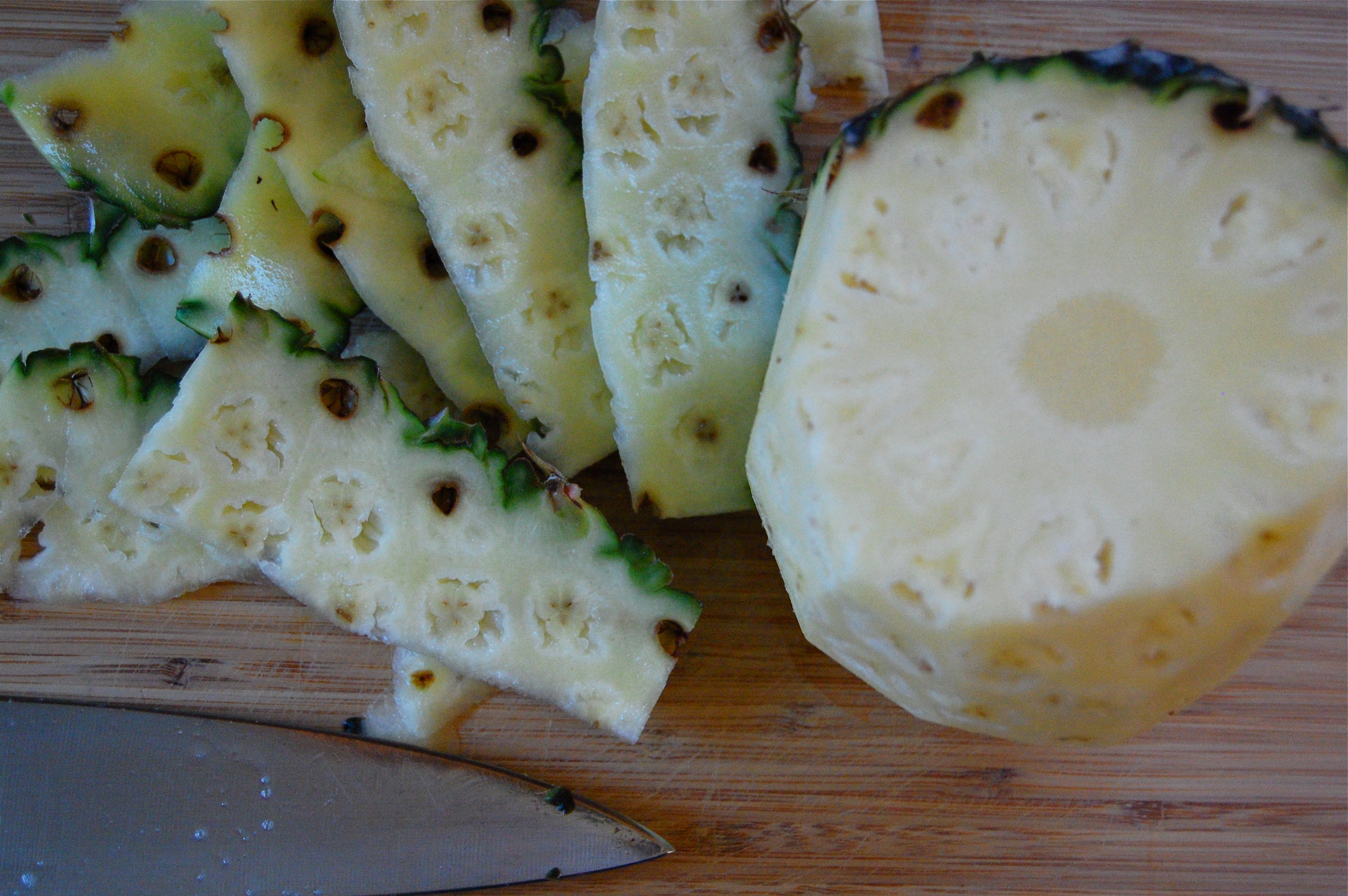
And then I got a little obsessive about making perfect little rings out of pineapple, using cookie cutters. I nestled my slices in the butterscotch sauce.

Then I made the most fabulous almondy cake batter.
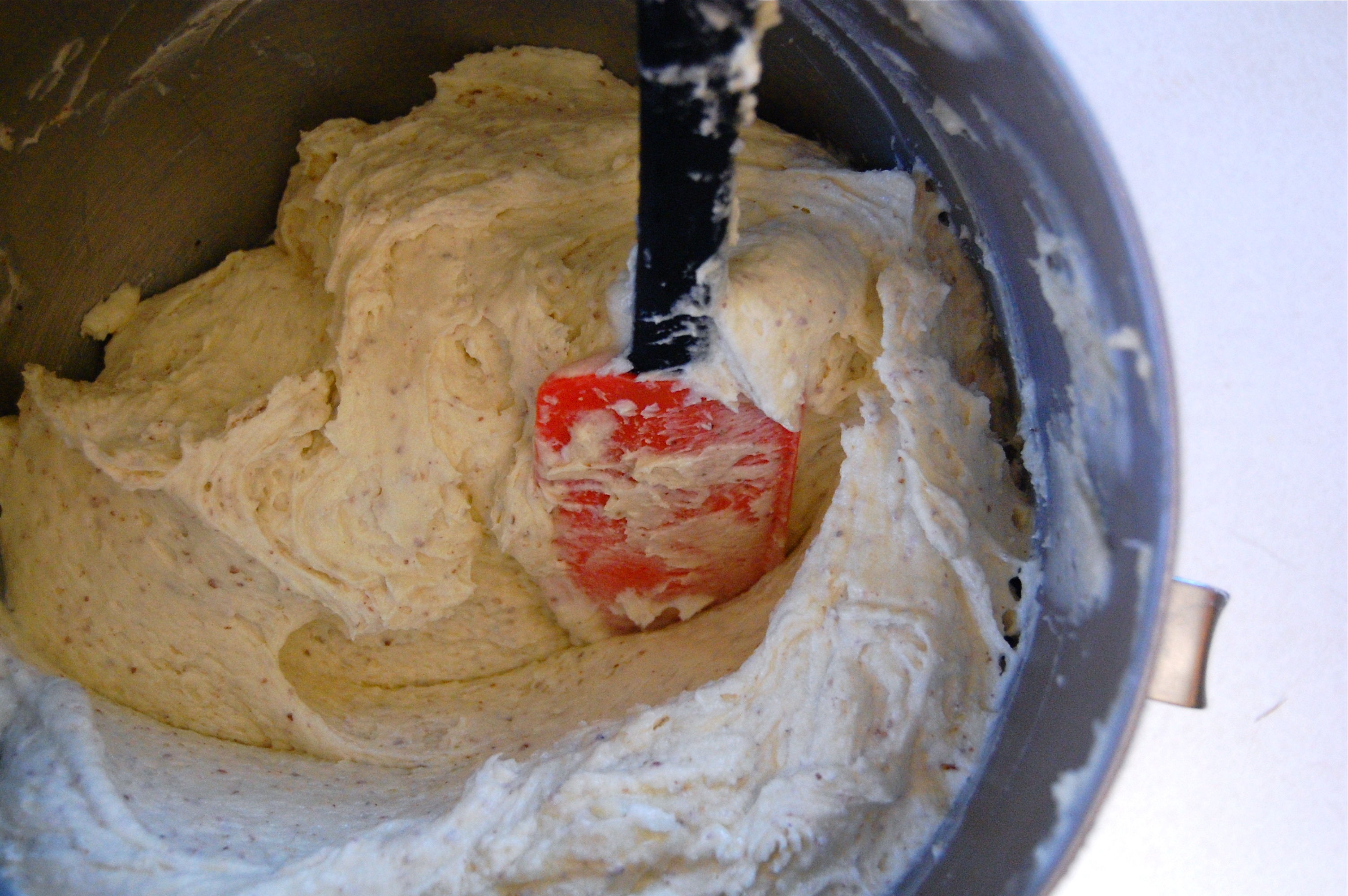
And spread it all over the pineapples.

I baked the cake until it was all browned and happy looking. It cooled for a bit and then I flipped it out onto a plate. And it looked just like this:
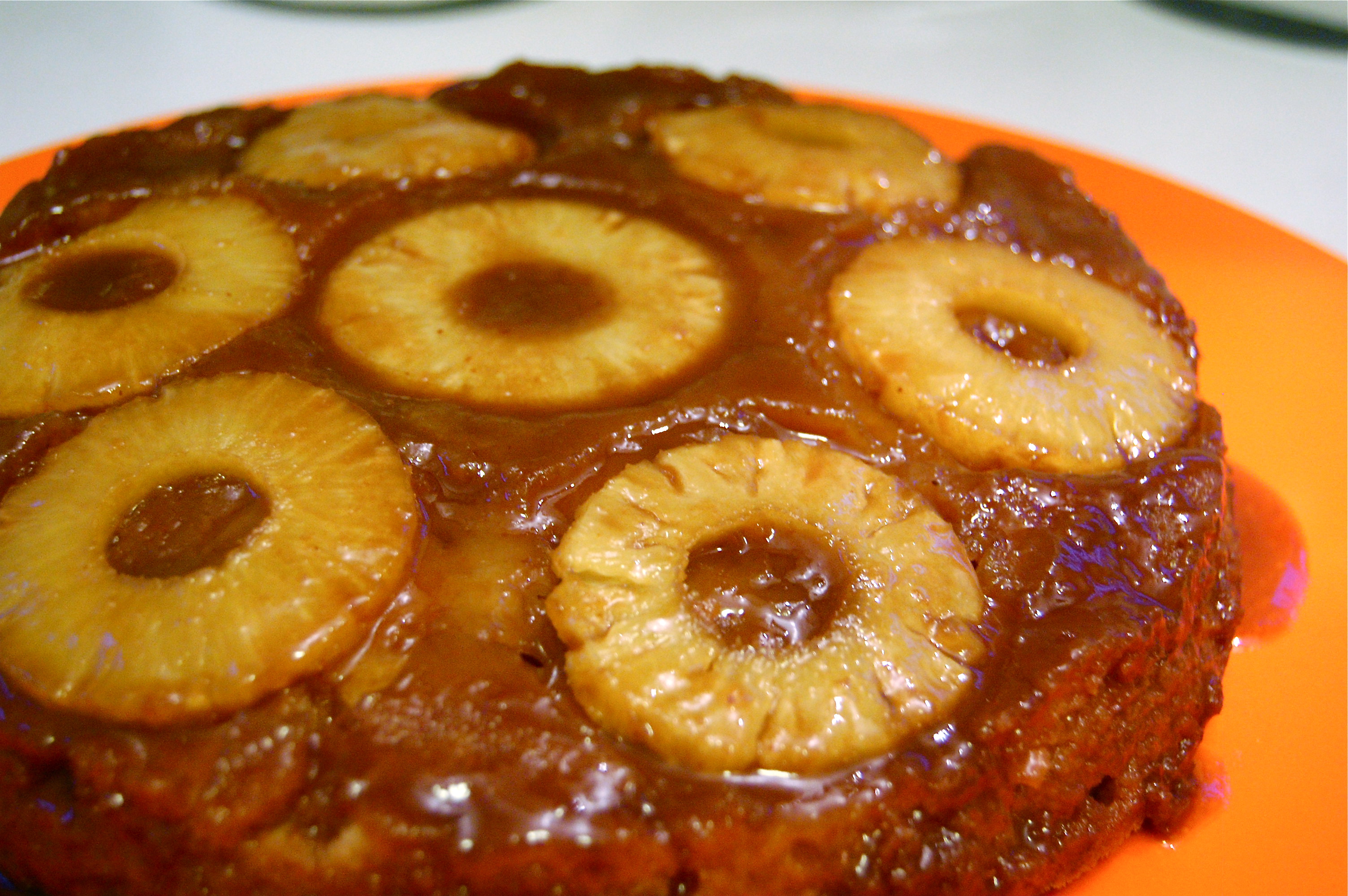
And I loved it. I love pineapple cake. Maybe I even love pineapples.
UPSIDE_DOWN PINEAPPLE CAKE RECIPE:
Butterscotch Sauce:
2 oz butter
1 cup brown sugar, packed
¾ cup heavy cream
1 TBSP vanilla extract
1 tsp salt
– Melt butter in saucepan.
– Add brown sugar, moisten.
– Cook on medium heat 3-5 minutes, stirring occasionally.
– Whisk in cream, vanilla and salt.
– Cook on medium high heat for 10 minutes, stirring occasionally.
Cake:
1 cup + 6 TBSP all-purpose flour
1/2 cup cake flour
6 TBSP (2 oz) ground almonds
3/4 tsp baking powder
1/2 tsp salt
1 1/2 cups of sugar
9 oz unsalted butter, room temperature
4 large eggs
1 vanilla bean
3/4 cup sour cream
– Preheat oven to 325 degrees.
– Scrape the seeds from the vanilla bean and rub the seeds into the sugar to break up clumps.
– Whisk the flours, almonds, baking powder, and salt in a large mixing bowl.
– Cream butter on medium speed for 1 minute. Slowly stream in sugar while continuing to beat. Add eggs one at a time, beating after each addition.
– Add dry ingredients alternately with sour cream, beginning and ending with the dries.
– Pour cake batter over butterscotch and pineapple in pan.
– Bake cake until tester inserted into the center comes out clean, about 1 hour. Cool cake in pan on a rack for 10 minutes. Turn cake out onto a platter. Serve warm or at room temperature.


 I made that!
5 comments